
Trust: Is It Earned… or Lost?

Recently, something small happened that made me think about trust in a whole new way. I’m close with a couple friends who are in a brand-new relationship. They’re already living together, doing life side-by-side, making plans like a “we.” And then one of them wanted to take a girls’ vacation with me—two women, friends, having fun… a cruise, some sunshine, laughter, a little freedom.

Simple, right?

But I could feel something underneath it. Not spoken. Not dramatic. Just… a tension. Like one of them was okay with the trip, but not really okay. Like trust was being negotiated instead of assumed. Like “permission” was disguised as “communication.” And it made me pause, because I’ve been there. I know what it feels like when trust becomes a measurement instead of a foundation.

And it made me ask the question I’ve been turning over ever since:

Is trust something you earn… or something you lose once it’s freely given?

The Way I Used to Think About Trust

If I’m committing to you—emotionally, spiritually, physically—then I’m giving you my trust up front.

Not blindly. Not foolishly. But intentionally.

I’m saying:
“I’m choosing you. I believe in you. I’m not going to start us off like you’re guilty until proven innocent.”

To me, love without trust is just anxiety wearing a pretty dress.

So for years, I lived like this:

Trust is a gift. It’s yours to lose.

And honestly? I still believe that’s how healthy love starts.

But Then I Think About My Marriage…

And I have to sit with a harder truth:

Maybe I was too trusting.

I know now my husband cheated on me repeatedly. And I didn’t just “find out later.” There were signs. There were moments. There were things I questioned—scratch marks, missing time, stories that didn’t add up. Even my children noticed things that didn’t make sense. And every time I brought it up, there was an explanation.

A smooth one. A confident one. A believable one—if you wanted to believe it.

And the truth is… I did want to believe it.

Because the alternative was unbearable.

The alternative was admitting that the person I built my life around—my home, my family, my future—was lying to my face.

So why did I put up with it?

Why did I accept explanations my gut didn’t buy?

Why did I doubt myself instead of doubting the story?

Here’s the answer I keep coming back to:

Because I wanted love to be real.
Because I wanted my marriage to be safe.
Because I wanted my children to have the family I promised them.
Because hope can be stronger than evidence—until it breaks you.

And for many of us who have loved a narcissistic or emotionally manipulative partner, trust becomes more than trust.

It becomes a weapon used against you.

Trust vs. Blind Faith

This is the part we don’t talk about enough:

Trust isn’t supposed to require you to abandon yourself.

Real trust is not you swallowing your instincts.
It’s not you making excuses for someone else’s behavior.
It’s not you “being the bigger person” while you’re shrinking inside.

Trust and blind faith are not the same thing.

Blind faith says:
“I’ll believe you no matter what you show me.”

Trust says:
“I believe you… and I pay attention.”

Trust doesn’t mean you ignore red flags.
Trust means you notice them—and you address them with clarity, not fear.

So… Is Trust Earned or Freely Given?

I think the real answer is:

Both.

Trust is offered in the beginning—because love needs room to grow.
And trust is earned over time—because character is revealed through patterns.

In healthy relationships, it looks like this:

  • You start with openness, not suspicion.
  • You build security through consistency.
  • You repair quickly when something cracks.
  • You don’t punish each other with control.
  • You don’t demand “proof” of loyalty like a prison guard.

And in unhealthy relationships, it looks like this:

  • Trust is treated like a currency—used to manipulate.
  • Freedom is labeled “disrespect.”
  • Boundaries are interpreted as betrayal.
  • Jealousy is dressed up as love.
  • You start explaining yourself like you’re on trial.

What Do You Do When Trust Feels Shaky?

If trust feels shaky in a relationship—new or long-term—here are a few truths I wish someone had told me sooner:

1) Trust should never require isolation.
If someone tries to cut you off from friends, experiences, or joy… that isn’t love. That’s control.

2) Trust is built through behavior, not promises.
Words are easy. Patterns tell the truth.

3) Your nervous system knows before your brain admits it.
If you feel like you’re walking on eggshells, explaining, proving, shrinking… listen to that.

4) A trustworthy partner doesn’t fear your freedom.
They don’t need to monitor you. They don’t need to “approve” your life. They don’t need to be convinced you’re loyal—they trust what you’ve shown them.

5) If someone has past wounds, the work is healing—not policing.
Your partner can share their insecurities, but it’s not your job to live smaller so they can feel bigger.

The Lesson I’m Learning Now

Here’s where I’ve landed:

I still want to be a woman who trusts.

Not because people always deserve it—but because I refuse to let betrayal turn me into someone who leads with fear.

But I’m also a woman who trusts wisely now.

I no longer confuse “giving trust” with “ignoring truth.”
I no longer mistake love for loyalty to my own suffering.
And I no longer stay in situations that require me to betray myself to keep someone else comfortable.

Trust is not just something you give to someone else.

Trust is also something you give to you.

To your instincts.
To your boundaries.
To your knowing.
To the part of you that whispered the truth… even when you weren’t ready to hear it.

A Question to Leave You With

If you’ve ever been betrayed, lied to, manipulated, or gaslit—this might be the most powerful question you can ask:

What would my life look like if I trusted myself as much as I tried to trust them?

Because healing isn’t just learning to trust again.

Healing is learning who deserves access to your heart—and who doesn’t.
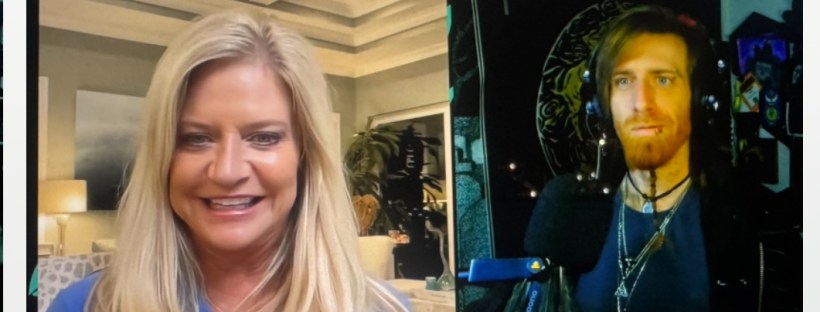
Retrieving Sanity Podcast: Life After Narcissistic Marriage with Kimber Foster

Recently, I was a guest on the Retrieving Sanity Podcast, and one of the things we talked about was a term that comes up often in narcissistic dynamics: DARVO. I wanted to share it here because once you know what it is, you start to see it—and it can help you make sense of conversations that leave you feeling confused, guilty, or like you’re the one on trial.

DARVO = Deny, Attack, Reverse Victim and Offender

  • Deny: “That didn’t happen,” “You’re exaggerating,” “You’re making things up.”
  • Attack: Criticizes or discredits the person speaking up: “You’re crazy,” “You’re the problem,” “You’re always starting drama.”
  • Reverse Victim and Offender: Flips the roles so they appear like the victim and you become the “offender”: “I can’t believe you’d accuse me,” “You’re hurting me,” “I’m the one being attacked.”

In simple terms, DARVO is a way someone avoids accountability by denying what happened, attacking the person who speaks up, and then turning the tables so they look like the victim.

Link to the episode: https://www.youtube.com/live/U5c8U88G1VQ?si=fc37lmg0l6eJWeZG

Why Family Matters: A Christmas Wish for Love and Peace

At Christmas, I like to pause and look at what truly matters.

And no matter what our story has been, I will always be grateful for this: that together we brought three incredible human beings into the world. They are my greatest joy, my proudest legacy, and the best parts of my life.

There were seasons when our roles looked different. While you worked hard to provide, I was given the gift of being the constant at home—hands-on, present, and all-in. I was there for the first breaths, first steps, first days of school, fevers, tears, tooth fairy nights, teacher conferences, practices, performances, and the thousand quiet moments that don’t make it into photos, but make up a childhood.

I don’t take that gift lightly. It shaped me. It shaped them. And it gave me a lifetime of memories I will never stop treasuring.

Today, I’m also grateful that our children still get to share experiences together and build memories that connect them as siblings. That matters. Family matters. And I will always want a life for them that feels full, supported, and loved.

So this is my Christmas wish: peace, health, and a softening of the hard edges for all of us. May our kids always know they are deeply loved. May they carry the best forward. And may this season remind us that gratitude doesn’t erase the past—it simply makes room for hope.

Merry Christmas.

Healing Misunderstandings: A Mother’s Perspective

Recently, I listened to my daughter’s podcast and heard her describe me as an “emotionally unattached parent.”

Those words landed like a punch to the gut.

Not because I think I was a perfect mother—no such thing exists—but because everything in my heart, my memories, and my lived reality says I was the exact opposite.

The Mother I Know I Was

I was the mom who showed up.

I was at the doctor’s appointments, dentist visits, sports practices, games, school events, and plays. I read bedtime stories, tucked her in, and whispered “you are so loved” more times than I can count. I called her my sunshine because she truly lit up every room she walked into, and my world revolved around making sure she knew that. I was essentially a single parent.

While her father focused on his career and traveled most of the time, I gave up mine to fill in the gaps to be two parents in one—emotional anchor, cheerleader, driver, tutor, advocate, and safe place. I was juggling not just her needs, but also her brother’s challenges and the weight of an abusive marriage I stayed in far too long because I believed keeping the family “together” was what the kids needed.

Was I tired? Absolutely. Overwhelmed? Often. But emotionally detached? No. If anything, I was hyper attached—tuned in, over-functioning, and constantly trying to fill in all the gaps.

When Love Starts Looking Like Limits

My daughter also shared how she “lost herself” because we moved a lot. I don’t dismiss that experience. Moving is hard on kids and teenagers. They leave friends, routines, and familiarity behind. Their grief is real.

At the same time, I remember those moves differently. I remember doing everything I could to make each new place feel like home. I remember the opportunities—great schools, new cultures, safe neighborhoods, travel experiences that many kids never get. I remember saying yes to activities and sports and adventures because I wanted her world to feel big, not small.

And then came the teenage years.

Like many teens, she went down a darker path—partying, drugs, and men who did not deserve her. That was when my role as “fun, cozy mom” had to shift. Love had to become boundaries. Curfews. Rules. Consequences. Hard conversations. Tears on both sides.

From the outside—or years later on a podcast—those years might look like “emotional disconnection.” From my side, it was the hardest, most courageous kind of love: stepping in, saying no, and refusing to watch my child self-destruct without intervening. I was doing my job – and well!

I was not abandoning her. I was fighting for her.

The Narcissist in the Middle

There’s another piece to this story that matters: I wasn’t co-parenting with a healthy partner. I was co-parenting with a man who has spent years rewriting reality, painting himself as the victim, and casting me as the “crazy, unstable, bad mom.” We were never on the same page; co-parenting.

During and after the divorce, he weaponized the kids’ love and loyalty. He has told them his version of events again and again—the one where I’m the problem, I’m the drama, I’m the unstable one. He knew my greatest fear has always been losing my relationship with my children, and openly threatened to ruin that bond.

That is the hallmark of narcissistic abuse: not just hurting you directly, but slowly eroding how others see you, especially your own children. Little digs. Half-truths. Stories told just skewed enough that you look like the villain.

And the painful part is this: I can see ways it’s working.

When my daughter sits behind a microphone and tells the world I was emotionally unattached, a part of me hears his voice coming out of her mouth. The same labels. The same distortions. The same rewriting of history where he’s the hero, and I’m the failure.

I don’t blame her for all of that. She was raised in the same fog I lived in for years. When you grow up around a narcissist, their story feels like the truth. Questioning it can feel like betrayal. It’s easier to side with the parent who seems powerful, successful, and certain than the one who’s been struggling, emotional, or broken open.

But just because a story is told with confidence doesn’t make it true.

Two Stories, One Past

What hurts the most isn’t just the label—it’s hearing our shared history told like a one-dimensional story where I’m the villain or the ghost.

She speaks publicly about the instability, the moves, the divorce, and my supposed absence… while leaving out the part where I was representing myself in court to save money because her father burned most of it on legal fees. She leaves out the part where I stayed longer than I should have in a toxic marriage to keep some form of stability. She leaves out the nights I couldn’t sleep because I was worried about how to afford their activities, school, and life while my own needs went on the back burner.

I don’t say this to shame her. She is allowed to tell her story. She is allowed to have her feelings, her lens, her pain.

But I am allowed to have mine, too.

God knows my heart. He saw the nights I lay awake, wondering if I was enough. He saw the times I almost broke, but got back up for my kids. He saw the ways I kept showing up, even when I was broke and broken. He also saw the manipulation, the gaslighting, and the quiet campaign to turn my own children against me.

Grace, Boundaries, and the 3 Choices

My daughter likes to talk about the “3 C’s” and the power of choice. In my own words, I see it like this:

  1. Complain – Stay stuck in the pain and replay the same grievances.
  2. Compare/Condemn – Focus on what others didn’t do perfectly and stay in blame.
  3. Celebrate – Acknowledge the good, the gifts, the ways love did show up—even in imperfect circumstances.

She has chosen, at least for now, to tell the story through complaint and condemnation. I wish she could also see the other side: that she never went without, that she had opportunities many children only dream about, that she had a mother who loved her fiercely and would have taken a bullet for her—who almost did for her, in some ways.

I’ve extended grace to her more times than I can count. There were times her actions hurt me deeply. Times she didn’t show up for me when I desperately needed her. Times I felt abandoned, judged, or dismissed. I could have gone public with those stories. I could have dragged her name through the mud, too.

I chose not to.

That, to me, is what grace and forgiveness look like: seeing someone’s flaws, recognizing your pain, and still choosing not to humiliate them.

The Boundary I Have to Hold

Hearing myself spoken about so harshly and inaccurately on a public platform—and knowing there is a narcissistic narrative behind it—has forced me into yet another boundary lesson.

I have always believed that love is supporting and lifting one another up—not breaking each other down for content or applause.

I still love my daughter. I am still proud of the woman she is becoming. I still pray for her and cheer for her from my corner of the world. But I also have to protect my own heart now.

I am too fragile—and frankly, too seasoned in this life—to continue being a doormat or a punching bag, even for people I love.

So this is where my boundary lives:

  • You can tell your story.
  • But you cannot continue to publicly distort mine without expecting me to step back and protect myself.

Maybe one day, if and when she becomes a mother, she’ll understand the deep, quiet, relentless selflessness that parenting really is—the way you hand your heart to your children and hope they won’t stomp on it when they’re older and hurting.

To Other Moms Who Feel Misunderstood

If you’re reading this and you, too, have been painted as the “bad mom,” the “emotionally unavailable” one, or the “problem” in someone else’s story—especially after surviving narcissistic abuse—please hear me:

  • Your memories matter.
  • Your version of events matters.
  • Your love and sacrifice count, even if they’re never fully recognized.

You can love your child and still hold boundaries. You can want reconciliation and still refuse to be humiliated. You can practice grace and still honor your own healing.

I have always believed that real love means supporting and lifting one another up—not tearing each other down.

God knows your heart, too. And even in the middle of heartbreak and confusion, I believe He is still capable of writing redemption into our stories. I don’t know exactly how my relationship with my daughter will heal or when, but I choose to keep a small light of hope burning—that one day we’ll be able to look at each other with softer eyes, kinder words, and a deeper understanding of how much we have always loved each other, even when she couldn’t see it clearly.

Why Boundaries Still Feel So Hard (Post Divorce)

You’d think that nearly eight years after divorcing a narcissist and rebuilding my life, I’d be a pro at boundaries.

I talk about them. I teach them. I write about the importance of saying no, of choosing yourself, of walking away from what hurts.

And yet, here I am—still struggling to stick up for myself. Still feeling that old familiar pull to “just go along,” to keep the peace, to be the easy one, the accommodating one, the people pleaser.

Recently, that pattern exploded in my face.


The Moment I Lost It

I was with a friend who kept pushing and pushing—antagonizing me, poking at sore spots, and refusing to let it go. You know that feeling when your nervous system starts buzzing, your chest tightens, and you know you should say, “Enough. Please stop”? (which I did ask over and over…..)

Instead, I did what I’ve done a thousand times before: I tried to stay calm, tried to be polite, tried to “handle it.”

Until I couldn’t.

I erupted. I shouted. All the swallowed words and the pushed-down feelings came out in one messy wave. I am not proud of how I reacted—but I am also human. I apologized.

And here’s the kicker: instead of accepting my apology, this person escalated. They instigated another argument. They kept going, saying more hurtful things, twisting the situation, making it all my fault.

That dynamic? Oh, I know it far too well.

Being married to a narcissist taught me exactly how that script goes.


Why Boundaries Feel So Hard After Narcissistic Abuse

People on the outside might say, “You’re divorced now. It’s been years. Why is it still so hard for you to speak up?”

Because my nervous system doesn’t know it’s been eight years.

It remembers:

  • What happened when I did speak up.
  • The punishment for having needs.
  • The silent treatment, the rage, the gaslighting.
  • Being told I was “too sensitive,” “selfish,” “dramatic,” or “crazy.”

When you’ve lived with that long enough, your brain learns a simple survival rule:
Keeping the peace = staying safe.

So I became very good at:

  • Reading the room.
  • Anticipating what everyone else needed.
  • Avoiding conflict at all costs.
  • Sacrificing myself so no one else would explode.

That survival strategy has a name: people pleasing, or in trauma language, the fawn response. It’s what happens when fight or flight or freeze aren’t options—so you make yourself small, agreeable, and convenient.

Even after the narcissist is gone, the pattern often stays.


The Cost of “Going With the Flow”

Here’s the problem: when I keep “going with the flow,” I’m usually the one drowning.

I let the comments slide. I ignore the red flags. I downplay the knots in my stomach. I tell myself:

  • “It’s not worth the fight.”
  • “Don’t be dramatic.”
  • “Just let it go.”

But I’m not really letting it go. I’m swallowing it.

And all of that builds up inside me—until something small tips the scale and I snap. Then I walk away feeling ashamed of my reaction, while completely skipping over the hundred boundary violations that led up to it.

After a conflict, my heart hurts. My chest physically aches. I replay every word. I wonder if I overreacted, if I’m the problem, if I’m somehow broken.

That’s not just overthinking. That’s PTSD.


When Friends Trigger Old Wounds

The hardest part is when the hurt doesn’t come from a romantic partner—but from a friend.

I don’t get into arguments often. I really do try to forgive, move forward, and keep things light. But when something hits that old nerve—when I feel mocked, pushed, cornered, or intentionally antagonized—it links right back to those years of being married to a narcissist.

Suddenly it’s not just about this one argument.

It’s about:

  • Every time I was made to feel “crazy” for having a feeling.
  • Every time I apologized just to stop the fight.
  • Every time I wished someone would simply say, “I’m sorry I hurt you.”

So when this friend doubled down after I apologized—when they chose to keep hurting instead of healing—it stung in a very old, very deep place.

Part of me wants to be the bigger person, rise above, ignore their hurtful words and actions. But if I’m honest? That “ignore it” approach ends up eating me alive.


Boundaries Are Not Meanness

Here’s what I’m slowly, painfully learning:

  • Having boundaries doesn’t make me mean.
  • Saying “that hurt me” doesn’t make me dramatic.
  • Walking away from someone’s repeated disrespect doesn’t make me unforgiving.
  • Refusing to be antagonized is not overreacting.

It makes me healthy.

For people who were conditioned to be people pleasers, boundaries often feel like betrayal—of others, and even of our old identity.

We were praised for being “nice,” “flexible,” “easygoing.” No one clapped for us when we said, “That’s not okay with me.”

So today, instead of trying to be the “cool girl” who lets everything slide, I’m trying to become the woman who:

  • Notices the discomfort early, instead of waiting until she explodes.
  • Speaks up the first or second time, not the tenth.
  • Gives one sincere apology—but doesn’t chase people who weaponize her vulnerability.
  • Honors her feelings instead of gaslighting herself.

What I Want If You See Yourself in This

If you’re reading this and nodding along—if you, too, feel guilty every time you set a boundary—I want you to know:

You’re not weak because this is hard.
You are not “behind” because you’re still struggling years later.
You are unwinding years of programming that told you:

  • Everyone else comes first.
  • Your discomfort doesn’t matter.
  • Your role is to absorb other people’s moods.

That doesn’t disappear just because the divorce papers were signed.

Healing is not linear. Sometimes it shows up in ugly ways—like shouting at a friend and crying on the drive home, wondering how you got there.

But that eruption is also data.

It’s your body saying, “Something here is not okay for me. I’ve been trying to tell you.”


What I’m Working On Moving Forward

I don’t have all the answers. I’m still very much in this with you.

But here’s what I’m trying to practice now:

  • Micro-boundaries. Instead of waiting until I’m boiling, I’m learning to say, “Hey, that didn’t feel good,” when it’s still a simmer.
  • Checking safety. Not everyone is a safe person for deep vulnerability. If someone repeatedly mocks, dismisses, or antagonizes me, that’s not a “friendship problem”—it’s a values problem.
  • Owning my reaction, not their behavior. I can take responsibility for shouting without excusing the repeated poking that pushed me there.
  • Letting apologies be enough. I can apologize once sincerely. If someone uses that as an opening to attack me further, that tells me everything I need to know.
  • Honoring my nervous system. If my heart is racing, my chest is tight, and I feel that trauma response—that matters. My body is not lying to me.

One Last Thing

My heart hurts after conflict. I feel it physically. And when someone I care about chooses to wound instead of repair, it reopens old scars.

But perhaps the invitation in all of this is not to become harder—but to become clearer.

Clearer about what I will and won’t tolerate.
Clearer about who gets access to me.
Clearer about the fact that my peace is not up for debate.

I’m still learning. I still slip back into people-pleasing. I still sometimes stay quiet until I can’t anymore.

But eight years after divorcing a narcissist, here’s what I know for sure:

I am worth protecting.
My boundaries matter.
And loving myself means listening when my heart says, This is not okay.

If that’s where you are too, you’re not alone. We can learn this together—one boundary at a time.

Prosperity in Breaking Free

For years, I lived under the shadow of fear. Fear of not being enough. Fear of failure. Fear of what would happen if I finally walked away from the control of a narcissist.


But fear is a liar. And God never created us to live in chains. He made us in His image—an image of freedom, peace, and abundance.

“For God has not given us a spirit of fear, but of power and of love and of a sound mind.” — 2 Timothy 1:7

When I finally broke free, prosperity didn’t show up in my bank account. It showed up in my heart. I prospered in freedom. I prospered in peace. I prospered in finally discovering who I was apart from someone else’s control.

Provision is God meeting your needs. Prosperity is when your life begins to overflow with His presence so you can bless others. For me, that prosperity has been courage, healing, and a new identity rooted in Him.

Hope carried me for a time, but hope alone wasn’t enough. Hope looks to the future. Faith acts in the present.

“Now faith is the substance of things hoped for, the evidence of things not seen.” — Hebrews 11:1

Faith is trusting God more than you fear the unknown. It’s resting in the storm, knowing the One who commands the waves is in control.

The day I chose freedom, a new kind of prosperity began to unfold—not measured in dollars, but in peace, joy, and rediscovering myself. That’s what faith does. It turns survival into abundant life.

“I have come that they may have life, and have it to the full.”— John 10:10

🌸 Prosperity isn’t always about money. Sometimes it’s about reclaiming your soul. 🌸

Retaliation and Manipulation: When a Narcissistic Ex Uses Your Child to Get to You


Retaliation and Manipulation: When a Narcissistic Ex Uses Your Child to Get to You


This fall, my son headed back for his junior year of college. For the third year in a row, I was pressured into fully furnishing his apartment.

What made this year different is that just before all this unfolded, I had reached out to my ex about his ongoing violations of our judgment of divorce — specifically his failure to meet certain financial obligations. Instead of addressing those issues, he retaliated. In retribution, he attacked me financially, pressuring me to assist our son far beyond what I could afford.

One of the most painful aspects of my experience was how the manipulation didn’t stop with my ex’s direct messages to me. He took it a step further initially by using his girlfriend to pressure my daughter, having her reach out and tell my daughter that I needed to “step up” as a mother. This was no accident or casual comment. It was a calculated tactic to drag my children into the conflict and use them as tools to control me emotionally and financially. By turning my children into messengers and pawns, he weaponized them to enforce his demands and deepen the pressure. This classic abusive strategy creates layers of guilt and confusion, making it harder for a mother to set boundaries without feeling she’s failing her children. Understanding this manipulation is key to breaking free from the cycle and protecting both yourself and your kids.

This time, I set a limit. My son had just had last minute shoulder surgery and, with only two weeks’ notice, they told me I needed to fly halfway across the country to help. As a Mother, there’s no place I’d rather be. However, the trip would have cost me thousands of dollars — money I simply didn’t have, especially while supporting our daughter who had recently moved in with me. So I gave my son a choice: I could visit and give him a helping hand for 2 days, (work and travel previously planned with our daughter commitment) or I could put some of that money toward his college expenses. Yet, they twisted both narratives, making it look like I was choosing to support my daughter over our son and that I didn’t care about his wellbeing. It’s an ugly tug of war meant to pull on a Mother’s heart strings.

Somehow, my ex twisted that into a promise to spend much more on his apartment. I’d already kindly offered to help financially with a set amount, and even that was more than I had planned to spend. When I refused to go beyond my limit, the conversation with my ex got ugly crossing all boundaries. I immediately shut it down, telling him I would no longer discuss it with him and would work it out directly with our son.

That’s when my son called me in tears, caught in the middle. I caved. This situation perfectly shows how a narcissist manipulates everyone to get his way. In this case, he wanted me to financially furnish our son’s apartment–something I never committed to and couldn’t afford. But, through guilt and pressure, he not only manipulated me, but also our son, daughter, and even his girlfriend, using them all as pawns.

The Hard Truth About Co-Parenting with a Narcissist

When you divorce a narcissist, the standard advice is: let go, go no-contact, don’t engage. But when you share children, total detachment is often impossible. The connection remains, and the narcissist will use it. One of their most painful tactics is weaponizing your children — using them as messengers, guilt-triggers, or bargaining chips.

How to Protect Yourself (and Your Children)

1. Recognize the Tactic
This is triangulation — bringing a third person into the conflict to exert control. When that third person is your child (and in this case, his girlfriend as well), it’s especially cruel. See it for what it is: manipulation.

2. Keep Your Boundaries Firm
Boundaries are not punishments — they’re acts of self-preservation. Once you set a limit, stick to it. It’s tempting to give in to make the discomfort stop, but each time you do, you teach the narcissist that pushing harder works.

3. Remove Your Child from the Middle
Tell your child calmly: “I know Dad is asking you to talk to me about this, but that’s between him and me. You don’t have to be in the middle.” Protect them from becoming the conduit for adult conflict.

4. Respond, Don’t React
If your ex is baiting you, slow down. Wait before responding. Sometimes, not replying at all is the most powerful move. “No” is a complete sentence.

5. Focus on What You Can Control
You can’t stop the narcissist from trying. You can choose not to play the game. Detach from the outcome and focus on your peace and your child’s emotional safety.

Final Thought

When they weaponize your child, their goal is to pull you back into the chaos. You can’t always prevent the attempts — but you can control your reaction. Hold your boundaries, speak with clarity, and keep your child out of the crossfire. Your sanity — and theirs — is worth protecting.

Every time I stand my ground, even if I stumble, I’m building strength. One step at a time. Believe in yourself.


Dead In America Podcast: Breaking Free From Narcissistic Abuse, Kimber Foster’s Journey to Healing

In this compelling episode of the Dead America Podcast, host Ed Watters sits down with Kimber Foster, author of Year of Thorns and The Divorce Checklist, to explore the realities of surviving and thriving after narcissistic abuse. Kimber opens up about her harrowing 30-year journey within a toxic relationship and the transformational process of breaking free from emotional manipulation and psychological control.


Listeners will gain powerful insights into how narcissistic behavior affects mental well-being and how subtle tactics—like gaslighting, guilt-tripping, and invalidation—keep victims trapped. Kimber offers practical steps for reclaiming personal power, including building self-belief, facing emotional challenges head-on, and rewriting the story of suffering into one of strength.


She also introduces her free guide designed to support individuals navigating the complex process of divorcing a narcissist, highlighting key checkpoints for legal, emotional, and spiritual preparedness. Kimber’s mission is to empower survivors to rise above pain and move toward healing with confidence and clarity.


Whether you’re in recovery, supporting a loved one, or seeking deeper understanding of emotional abuse, this episode is both educational and deeply affirming.


00:00 Cutting the Chains of Control
00:54 Meet Kimber Foster: Author and Survivor
02:11 Recognizing Narcissistic Behavior
05:24 The Journey of Self-Discovery
10:58 Breaking Free and Finding Support
20:37 Practical Advice for Divorce
27:15 Final Thoughts and Resources
https://thehub.mastermind.com/v2/prev…
Divorce Checklist “The Ultimate Survival Kit to Freedom from a Narcissist” Free Copy for listeners
https://a.co/d/dzBrda9
Year ofThorns, What to Expect When Divorcing a Narcissist Amazon Link
https://a.co/d/fsYI5yy
Divorce Checklist “The Ultimate Survival Kit to Freedom from a Narcissist” Amazon Link
@yearofthorns Instagram
/ yearofthorns

Click Here for Podcast Link: https://www.youtube.com/watch?v=a4_LWuJ_gG0

Podcast: Life-Changing Challengers, “Surviving Narcissistic Abuse – Kimber Foster’s Path to Empowerment.”

Surviving Narcissistic Abuse – Kimber Foster’s Path to Empowerment

Podcast link: https://www.lifechangingchallengers.com/surviving-narcissistic-abuse-kimber-fosters-path-to-empowerment/

Kimber Foster shares her journey of surviving narcissistic abuse, finding healing, and empowering others with her book, The Year of Thorns.

Season 5

In this compelling episode of Life-Changing Challengers , host Brad Minus sits down with Kimber Foster, author of The Year of Thorns: What to Expect When Divorcing a Narcissist. Kimber opens up about her journey from an overachieving, people-pleasing child in Grand Rapids, Michigan, to enduring a toxic marriage characterized by narcissistic abuse, manipulation, and control.

After 27 years in a marriage with a narcissistic spouse, Kimber found herself emotionally broken, isolated, and fighting to regain her sense of self. Through her writing, coaching, and advocacy, she now empowers others to recognize red flags, break free from abusive relationships, and reclaim their lives. This episode is a raw, honest look at the insidious nature of narcissistic abuse and the strength it takes to rise above it.

Episode Highlights 

  • [2:00– Kimber’s childhood as the youngest of three, growing up as an “oops” child in Michigan
  • [15:00– Early red flags in her marriage and the gradual erosion of her self-worth
  • [30:00– The isolation caused by constant moves and her husband’s control over their life and finances
  • [45:00– Surviving emotional, verbal, and physical abuse and the realization she was married to a narcissist
  • [1:05:00– The breaking point: a panic attack that forced her to face the reality of her situation
  • [1:20:00– Writing The Year of Thorns and why sharing her story was a turning point in her healing
  • [1:35:00– Kimber’s divorce checklist: A comprehensive guide for those preparing to leave a toxic relationship

Key Takeaways 

  1. Love Bombing Is a Red Flag – Narcissists often come on too strong too fast to create a false sense of connection.
  2. Narcissists Never Take Accountability – If someone constantly blames others and never admits fault, pay attention.
  3. Gaslighting Is Psychological Abuse – Making you doubt your reality is a classic tactic used to maintain control.
  4. Reclaiming Your Identity Takes Time – After years of manipulation, rediscovering your self-worth is a process.
  5. Resources Exist—You’re Not Alone – Kimber’s Divorce Checklist offers practical guidance for those ready to leave.

Links & Resources 

  • 📘 Book The Year of Thorns: What to Expect When Divorcing a Narcissist – Buy on Amazon 
  • 🌐 Website YearOfThorns.com – Access free resources including her Divorce Checklist , blogs, and coaching info
  • 📱 Connect with Kimber on Social Media :

If this episode resonated with you or someone you know, please share, subscribe, and leave a review . Kimber’s story is a testament that healing is possible.

Have an idea or feedback? Click here to share. 

Contact Brad @ Life Changing Challengers 
Instagram: 
@bradaminus 
Facebook: @bradaminus 
X(Twitter): @bradaminus 
YouTube: @lifechangingchallengers 
LifeChangingChallengers.com

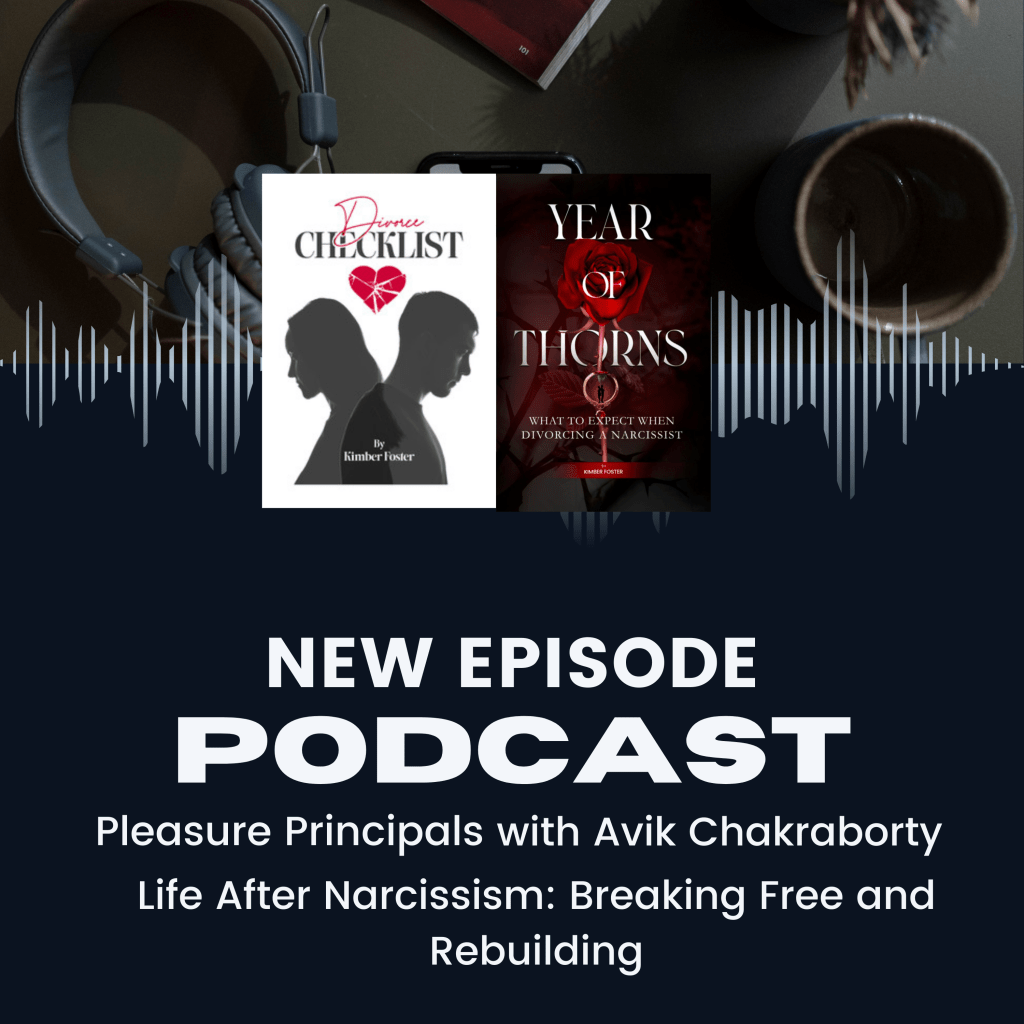
Pleasure Principles Podcast: Life After Narcissism: Breaking Free and Rebuilding – Kimber Foster

Kimber Foster’s voice trembles slightly as she recounts the moment she knew she had to escape her narcissistic marriage. “He told me he would destroy me, leave me with nothing, turn the kids against me…” It wasn’t just emotional survival at stake—her very sense of self had been systematically dismantled over years of psychological manipulation.

This powerful conversation dives deep into the mechanics of narcissistic abuse, examining the 17 distinct manipulation tactics Wendy identified through her own traumatic experience. From the initial “honeymoon phase” where narcissists morph into your perfect partner, to the gradual erosion of boundaries, self-worth, and reality itself, Kimber Foster walks us through the playbook used by these master manipulators. Her insights on gaslighting, projection, and isolation reveal how victims find themselves trapped on what she calls “the crazy wheel”—a disorienting cycle where you’re constantly questioning your own perceptions and worth.

The most valuable aspects of our discussion focus on the practical steps for breaking free, especially when children are involved. Kimber shares the divorce checklist she created (available as a free download through our show notes), which covers everything from financial preparation to establishing safe communication channels. Perhaps most importantly, she offers hope to those still trapped, emphasizing that healing isn’t just about escaping—it’s about rediscovering joy, pleasure, and a renewed sense of self after years of survival mode. “Don’t let fear hold you back,” she urges. “Believe and trust in yourself and move forward.” For anyone who has felt the suffocating control of a toxic relationship, this conversation serves as both validation and roadmap toward freedom.

Listen by clicking here:

https://www.buzzsprout.com/2408840/episodes/16839311

Must Listen Episode: Murder, Blood & Psychopaths

It was a pleasure to be a guest on Murder, Blood and Psychopaths Podcast – Episode 97. See link below to listen.

⭐️⭐️⭐️⭐️⭐️ A Must-Listen Episode with Kimber Foster! Kimber Foster was an absolutely phenomenal guest on MBPodcast! Her firsthand account of marrying, divorcing, and still dealing with a narcissist was raw, eye-opening, and deeply impactful. She brought a rare mix of vulnerability and strength, offering not only her personal journey but also valuable insights and survival strategies for anyone navigating a toxic relationship. Her ability to articulate the emotional and psychological toll of narcissistic abuse while providing practical guidance made for an unforgettable episode. Kimber didn’t just share her story—she empowered listeners with the tools to recognize red flags, break free, and rebuild. If you or someone you know has ever dealt with a narcissist, this episode is a must-listen. We highly recommend her book A Year of Thorns and the invaluable resources she offers. Thank you, Kimber, for your courage and wisdom! 🔥👏 #Survival #Empowerment #NarcissisticAbuse #MBPodcasts

https://sites.libsyn.com/413645/site/episode-97-surviving-a-narcissists-grip-kimber-fosters-story

MBP (Murder, Blood, and Psychopaths): Episode 97: Surviving a Narcissist’s Grip: Kimber Foster’s Story

MBP (Murder, Blood, and Psychopaths): Episode 97: Surviving a Narcissist’s Grip: Kimber Foster’s StoryPodcast Title: Murder, Blood, and Psychopaths – Episode 97: Surviving a Narcissist’s Grip: Kimber Foster’s Story this gripping episode of Murder, Blood, and Psychopaths, we welcome Kimber Foster, author of A Year of Thorns: What to Expect

From Fear to Freedom: Breaking Free from Toxic Relationships with Kimber Foster

In this compelling episode of Healthy Mind, Healthy Life, host Avik Chakraborty sits down with Kimber Foster, author of A Year of Thorns: What to Expect When Divorcing a Narcissist. Kimber shares her inspiring journey of surviving and escaping a toxic 27-year marriage, offering raw and unfiltered insights into reclaiming identity, joy, and freedom. Together, they explore the emotional and psychological challenges of leaving a toxic relationship, the impact on mental health, and the courageous steps required to move forward. Whether you’re navigating a toxic relationship, recovering from its aftermath, or simply seeking stories of resilience, this episode provides valuable lessons and hope for building a healthier, more fulfilling future.

About the Guest Kimber is an author, advocate, and survivor whose story embodies resilience and healing. After enduring a 27-year toxic marriage and reclaiming her life, Kimber authored A Year of Thorns: What to Expect When Divorcing a Narcissist, a powerful guide for those escaping the grip of toxic relationships. With a mission to inspire and empower others, Kimber openly shares her journey to freedom, focusing on overcoming fear, rebuilding self-worth, and fostering personal growth.

Key Takeaways Recognizing Toxicity: Kimber likens her experience to the “boiling frog” analogy, highlighting how gradual exposure to toxicity can desensitize and trap individuals in unhealthy relationships. Why Leaving Feels Harder Than Staying: Fear of the unknown, fear of change, and fear of being alone are significant barriers to leaving a toxic relationship. Kimber emphasizes that staying is a choice to remain in the cycle of pain and suffering. Impact on Health: Living in a constant state of fear and stress takes a toll on physical and emotional health, creating a “fight or flight” cycle that stifles growth and well-being. The Courage to Break Free: Kimber advocates for pushing beyond the comfort zone, embracing courage, and stepping into the unknown to unlock personal freedom and potential. The Role of Resilience: Struggles and challenges can become a source of strength and growth. Kimber reminds listeners that adversity shapes and prepares us for a more empowered future. Empowering Others: Kimber’s journey serves as a beacon of hope for those trapped in toxic relationships, showing that healing, joy, and a new beginning are possible with courage and determination. This episode is a must-listen for anyone seeking inspiration and tools to reclaim their life and find freedom.

https://www.podbean.com/pu/pbblog-gzsmf-108a023

https://www.podbean.com/ew/pb-vyxyt-1763851

If I Could Speak to Myself from 10 Years Ago…

Dear Younger Me,

I know you’re in a place right now where confusion and doubt are part of your daily life. You’re questioning yourself because the one person who is supposed to love you makes you feel like you’re crazy. But hear me when I say this, “You are not crazy. Your feelings deserve recognition, and your reality is valid.”

Breaking free from a toxic relationship, especially with someone who exhibits narcissistic traits, is daunting, but it’s essential. You’re not losing your mind; you’re losing yourself in this destructive cycle. The manipulation, the gaslighting, the constant need to cater to someone who loves only what you can do for them, not you as a person—it’s taking its toll.

You need to know this earlier: he will never change. His love is conditional and transactional, bound by what he can gain, not by genuine affection or respect. Staying in this relationship, thinking it might be better for the children, is misleading. Children soak up their environments more than we realize. They are learning what a dysfunctional relationship looks like, potentially setting them up for similar patterns in their own lives.

It’s okay to prioritize your mental and emotional health. Setting boundaries will not make you a villain but rather a protector of your peace. Recognize that you deserve respect from your husband, as do all people who share their lives so intimately. It’s not selfish to want a life where you are seen and valued for who you are, not just what you provide or endure.

Reflecting on this, consider this your action plan:

  1. Acknowledge: Accept that your situation is not your fault. Acknowledging the reality without blame helps you reclaim your power.
  2. Set Boundaries: Practice saying no. No to behaviors that are hurtful, no to blame that isn’t yours, and yes to your autonomy.
  3. Prioritize Self-Care: Your well-being is crucial. Seek therapy, join support groups, do whatever it takes to build a safety net of care around yourself.
  4. Make the Tough Decisions: Know that leaving may be hard, but sometimes the hardest decisions are the ones that set us free.

I believe in your strength to break the cycle. You are resilient, and your life beyond this relationship is filled with peace and respect. Don’t allow fear to be your captor; let it fuel your strength and courage to change course.

With all the love and understanding that comes from hindsight,

Your Future Self

Year of Thorns: Dealing with Narcissistic Manipulation – Book Review

I am truly thankful for the one-star review of my book listed below, “Year of Thorns: What to Expect When Divorcing a Narcissist.” This review succinctly captures all 17 manipulative tactics of a narcissist in one paragraph. Their attempt to (Smear), sway others (Third-Party Reinforcements) and (Project) what are clearly their own insecurities needing the get the last word in.  Starting with the Name:  “Discerning Eye” (Stalking).  “Tragic Clown” (Verbal Abuse). Claims that I was the one “rejected” (Fear of Abandonment & Altered Reality). “Mention of children” (Guilt and Parental Alienation). “Dog could write better” (Devaluing). Next books in the series – “personally responsible & evolve” (The Mirror Effect) and finally my personal favorite – “bitter  & alone” (Judgement & Shame). Thank you Discerning Eye. It only validates my story and gives meaning to what I endured so that I may help others moving forward. #happyandlivingmybestlife

The Discerning Eye

1.0 out of 5 stars Dumb. Don’t bother. Reviewed in the United States on May 29, 2024, Amazon

“Visualize a tragic clown vomiting on paper. This book wreaks of pent up revenge fantasies fueled by rejection. If every person that ends up divorced did this, we would be killing trees for zero purpose. Tragic mostly for the kids that have to be subjected to their parent ranting like this about the other parent. For every book like this there should be a counter book from the other party. My dog can be an author if this is the standard. My vote for the next book in the series would be “How to Become Personally Responsible and Evolve” or “Top 10 Ways to Not End Up Bitter & Alone”.

Year of Thorns: Unveiling a Universal Story of Struggle and Healing

I’m bursting with excitement to share some truly thrilling news with you. After years of unwavering dedication, soul-searching, and sheer determination, the book I’ve poured my heart and soul into is finally ready to grace the shelves. This isn’t just any ordinary project for me; it’s a profoundly personal narrative that delves deep into the intricate journey of my family.

Let me assure you right from the start that my intention in writing this book was never to cast shadows or pry into private family matters. Quite the opposite, actually. My sole aim has always been to share my experiences with the hope of offering solace and guidance to others navigating similar challenges.

In order to safeguard everyone’s privacy and uphold our family’s boundaries, I’ve chosen to adopt a pen name and alter the identities of the characters within the book. My utmost wish is for this tale to be a wellspring of hope and understanding, without causing any discomfort to my cherished ones.

This decision wasn’t taken lightly. It was born from deep reflection and a genuine desire to liberate myself from past pain and dysfunction. I firmly believe that by openly addressing our struggles, we can pave the way for healing and growth, not only for ourselves but for generations to come.

It took me six years to complete this book. I’m no professional writer, but I felt an undeniable compulsion to share my story. It consumed me, spending eight or more hours a day writing, reading, and researching, trying to unravel how I found myself in that place in my life. Through my research, I came to realize that my story wasn’t unique; it was universal. How did I not see it all those years, despite considering myself pretty smart, even with a degree in psychology! Words cannot fully express the intense need and obsession I felt to share what I had learned along the way. However, this obsession took its toll, and I had to take a break from the manuscript for a few years while I focused on myself, relocating and rediscovering joy.

The thought of perpetuating a cycle of dysfunction within our family, particularly knowing its impact on my own children, was simply unbearable. My hope is that by sharing my story, I can contribute to a future where love, understanding, and compassion prevail.

I also created a “Divorce Checklist” available on Amazon/Kindle which offers a comprehensive guide of what to include in your Judgement of Divorce leaving no stone unturned. This guide will empower you to advocate for yourself and secure your future, helping to manage both the emotional, logistical and financial complexities of divorce.

As my book and checklist are released, I hope you’ll grasp the truth I aim to convey and understand the necessity I felt in sharing it. Just as my pastor/prophet suggested, I believe my purpose is to share my story to assist others on their journey. To all who supported me during my “Year of Thorns,” I extend heartfelt gratitude for your love and encouragement that gave me the strength to persevere.

Stay tuned for the Kindle/Amazon release – link coming soon! Year of Thorns By Kimber Foster

Emotional Manipulation Tactic #15 – Trivializing

adult alone anxious black and white
Photo by Kat Jayne on Pexels.com

Emotional Manipulation #15 – Trivializing

The abuser trivializes any problem or issue you have into something small and essentially tells you that your problem isn’t a problem. Instead of rightfully and gracefully acknowledging your point and hurt feelings, they will tell you that you’re wrong, and your opinion is wrong and more important, they aren’t at fault for anything. They don’t have to own up to anything they’ve done wrong if they can convince you that you are the wrong one, or you are making a big deal out of nothing. This is manipulation at its finest and leads you to feel dramatic and unworthy of your abuser. Perfect for them – they win on all fronts.

I recall one night while sitting around the dinner table, our daughter asked me to be a judge for her upcoming Distributive Education Club of America (DECA) competition, as I used to be the President of our club in High School.

“I’d love to,” I said. I was so excited that the school and my daughter had invited me to be a part of the competition.

Scott laughed. “You don’t know anything about working having not been an integral part of the workforce in years.” He continued, “You’re not qualified to be a judge for a dog contest, yet alone a high school competition!”

After the children left the kitchen, I told Scott that his comments hurt me profoundly and embarrassed me in front of our children.

Scott just continued to laugh, saying “You’re making a big deal out of nothing.”

You see, my opinions didn’t matter. Neither did my feelings.

Scott would relish in telling our friends embarrassing stories about me that he thought were hysterical. When I would express my feelings were hurt or that I was extremely embarrassed, Scott would trivialize it stating, “Come on, it was funny. You’re being too sensitive.”

The same applied when I would question Scott’s flirting and promiscuous behaviors. On more than one occasion I noticed what was obviously finger nail like scratches on his back.   According to him I was just acting jealous, delusional, and/or making a big deal out of nothing.  How dare I even question his fidelity! They were just scratches from the weight bench. ( Yeah right!) 

Unfortunately, most of the time when a narcissist trivializes your feelings they are acting in a hypocritical way. A narcissist, simply put, is a person who has an excessive interest in or admiration of themselves. Most importantly, narcissists are slow to believe they are “wrong” (if they ever do at all), don’t listen well to others’ opinions, and believe their way is the right one—the only way. If you put narcissism and hypocrisy together, you get a marriage made for one another.

So what can you do when a narcissist trivializes your feelings?

  1. Determine what’s most important to you. Not what your parents told you, not what your boss says is true, not what your friends care about, but rather, what matters to you and OWN IT.
  2. Examine where you are in alignment with what you care about and where you need to make modifications. Don’t judge yourself, don’t berate yourself, just notice the misalignment and figure out what to do to bring your thoughts and actions more closely together.  Don’t argue, don’t engage as much as possible the narcissist.
  3. Refrain from telling others what to say, do and believe. The biggest hypocrites/narcissist tend to be the ones who believe they know what’s right for everyone but themselves.  The next time you catch yourself about to tell the narcissist what is right or wrong for them, just stop. They won’t listen. They will just project back onto you.
  4. Spend quiet time. Meditation is not for everyone, but in a world with a constant barrage of information, opportunities for reading nasty posts or posting them yourself, are not a good idea. Finding personal space can be very healing. Take a walk—without the cell phone or earbuds. Stand outdoors and listen to the air. Go into a quiet place in your home and simply sit. Find ways to give yourself space to just be.
  5. Focus on you. It’s very freeing to stop trying to fix or change others and to focus on what you are doing. If you put your energy into watching your own actions and reactions, and carefully choosing the words you use, you will cease having interest in what others are doing. The hypocrites will run merrily on their way, but you won’t be hooked by them. Jump off that crazy wheel!

Emotional Manipulation #4 – Setting Smoke Screens

blue and white smoke digital wallpaper

Photo by Rafael Guajardo on Pexels.com

Narcissist throw a smoke screen over whatever it is that you bring up and use another issue as a diversion from the actual topic. Narcissist don’t want you to be on the topic of holding them accountable.  If you really want to talk about the issue that’s bothering you, you’ll have to  continually try to get back to the subject at hand, which is difficult in the first place.  And then of course there’s the fear of  their reaction.  

When I confronted the narcissist about anything, he would change the subject or make everything seem like a joke.  On one occasion during our divorce, after his constant invasions of my personal space I asked him, “Why do you keep breaking into my room and going through my personal files?” 

The Narcissist replied, “You’re the one that abandoned the family,” completely changing the subject in attempt to shift the blame. If I complained about his neglectful parenting, he would point out a mistake or event that happened years ago.   Somehow he would turn the tables on me.  

When I asked the narcissist about his non-status quo purchases during our divorce, he replied, “Why don’t you get a job so you can pay for all your drinking with your new boyfriend.” I wasn’t out drinking and I didn’t have a boyfriend at the time.  It was frustrating to say the least.  But over time I began to learn and recognize the pattern and his smoke screens.    It’s not me.  I’m not crazy.  

I also learned there’s no arguing with the silver tongued devil.  I would never win, nor would I ever get the answers to my questions through his smoke and mirrors.

Listen to Your Inner Voice

woman standing on seashore

Photo by Artem Bali on Pexels.com

Within each of us, there are numerous voices often that compete for our attention. It can be difficult to decide which one to listen to, particularly when their messages are all quite different, sometimes conflicting, and even alluring. One voice, however, is the speaker of truth. Among all your inner voices, your true inner voice is the one which encourages you, gives you hope, and pushes you to trust and believe in yourself. Conflict within oneself is often caused by dueling voices inside of each one of us. As we move through life, we get mixed messages from the various aspects of ourselves. Some of our voices, such as the naysayer or saboteur, can speak so loudly that they drown out the voice of truth. Listening to your true inner voice  often the voice of understanding, support, and self-assurance – can help lessen and even resolve internal conflict. 

If you’re looking toward the future but your faith in your ability to succeed in life is wavering, you will benefit from finding and listening to your true inner voice. You can connect with it by remaining relaxed and alert, while listening carefully. If you have trouble distinguishing your true voice from the others, meditation may be helpful. You may hear many voices as you meditate, but the one you should pay attention to is the one that speaks to you with love, understanding, and compassion. It will bolster your spirits and urge you to go after your dreams. And it will never cause confusion, remind you of past mistakes, or cause you to doubt yourself. 

The more you listen to and believe in what your true inner voice is telling you about your value and your potential, the stronger that voice will become. And the more you disregard the voices that can interfere with your resolve to succeed, the quieter those voices will become. Saying no to the voices that are judgmental and make you feel ashamed will help you stop being critical of your failures and afraid of success. By finding and strengthening your true inner voice, you will be able to ignore internal conflict and pick out the one that speaks the truth.

“The longer you listen to and believe your true inner voice, the stronger it will become.” Daily OM

#Metoo


group hand fist bump

Photo by rawpixel.com on Pexels.com

#Metoo.  Women are abused in all forms. Not just sexually. One of today’s top news stories is about sexual abuse – something that allegedly happened 20+ years ago.  So what about those who find the courage to tell their true life’s story of verbal and physical abuse today — only to be subjected to fear through threats of retribution?

Someone needs to make a stand. Abuse in all forms is unacceptable. It shouldn’t matter the degree. Sexual, verbal, physical, mental or even bullying. It’s wrong. Abuse in all forms is wrong.

I applaud those who have the courage to come forward, sharing their trials and tribulations. It takes tenacity and grit. Unfortunately, even with freedom of speech, those victims then become the target of criticism and ridicule. Many times those courageous souls are then threatened with claims of defamation and slander — legal intimidation, only to placed back in the victim seat once again.

Our society needs to change.

If you agree…. share this message. Share it with your friends. Support the #metoo movement and for all those who have ever been made to feel less than or hurt. Now is the time to stand up – and shout from the roof tops “No More!” Listen, learn and help others.

Life is a gift. One we must cherish. Love and help one another.

Police Report #1

police money finance funny

Photo by Pixabay on Pexels.com

January Journal Continued . . . 

The kids needed cash for various things such as ski club and travel money for our daughter’s upcoming Distributive Education Club of America (DECA) trip.  Scott refused to give me or the kids any money.  So, I went to our local credit union and withdrew $100.  Scott even stated that he will not pay the overdue credit card bill that is in my name, purposely damaging my credit.   

I had opened a new card about a year ago to get the double airline miles.  When I applied online, I couldn’t figure out how to add another name.  Besides, I thought at the time I should start building credit of my own, having contemplated divorce even then. But I considered it a family account as I put all the monthly utilities and joint expenses on that card, most being direct debit and all paid from our joint bank account.  

“I refuse to pay for anything that isn’t mine; you have to pay for your own expenses and attorney fees,” he said. (I was so glad I had secretly began recording our conversation, showing proof of his attempts to alienate me from our finances.)

When I expressed “You know I don’t have any money of my own. It’s all in our joint account,” Scott then stipulated, “Well then, I guess you need to sell some of your jewelry or go get a job.  I’m not paying your credit card bill.” 

Having heard enough, I left and headed over to a neighbor’s house where we drank a glass of wine and soaked in her hot tub.  I did not want to have to deal with him anymore that day knowing there was no way I could battle with the silver tongued devil.  When I returned to the house later that evening, Scott pounced on me in the kitchen the moment I walked in the door.  He was obviously drunk, slurring his words and visibly angry with his stance.  

He wanted to know, “Where did you go?  Who were you with!?”   Once again if insinuating that I was having an affair.  Then he accused me of being drunk having noticed that I took a bottle of wine with me when I left earlier.  

Finally he got around to the real subject that was bothering him.  He had noticed the tax files were missing from our home office, and asked, “Where are the tax files!?” 

I explained, “I dropped off the tax files to be copied.” I did not tell him I had left the tax files with my new attorney. But it didn’t really matter either way.  His reaction was NOT normal, unless he had something to hide.

Because I had temporarily removed the tax files Scott was now accusing me of violating the MSQ and MRO orders. Scott then demanded to know when, where and with whom I left our tax files with?  When Scott didn’t get the answers he was seeking, I could tell his anger was quickly rising.  He stood within a few feet of me, purposely invading my personal space, screaming now within inches of my face demanding answers.  

Not knowing what else to do, I bolted, running up to my room.  Scott was right behind me as he chased me into the master bedroom. I managed just in time to lock myself in the master bathroom slamming the door in his face. Terrified I dialed the police.  I didn’t doubt for one second it could have escalated to physical abuse if I hadn’t locked myself in the bathroom.  He was crazy mad, and Mr. Hyde was banging on my door yelling “I’m pressing charges! You just assaulted me with the door!” (Keep in mind, I am recording everything.)

Not long after I made the call, the police came and made sure I was ok. The officer told Scott to leave me alone, and left.  Instead of listening to the officers, Scott’s irrational and erratic behavior escalated.  I had to take refuge in the master bathroom again while I heard Scott pacing outside the bathroom door shouting more obscenities and ranting. (Thank goodness I had video taped Scott’s erratic behavior that day, proving I hadn’t assaulted him with the door. It would come in handy later.)

When all was quiet and it seemed like Scott had given up, I went to check on Cooper. I hoped our son slept through the whole ordeal. I was relieved to find him sound asleep.  When I went to go back into my bedroom a minute later I found the door shut and locked. Scott must have waited for me to open the door, then snuck in while I was checking on Cooper. I was banished to the basement again without my PJ’s, toothbrush, and my medication.  I could have picked the lock, but I wasn’t about to sink to his level, nor did I want to disturb the drunken Supreme Being, afraid of his retaliation.  I’d had enough of Scott that night.  Best to stay away. 

Unbeknownst to me, Scott sold more E*TRADE stocks that day and requested that the check be sent to him via overnight express. Another MRO & MSQ violation. 

Now What?

anniversary beautiful birthday bloom

Photo by Nubia Navarro (nubikini) on Pexels.com

December 28th – (After my lightbulb moment) Happy Anniversary

Once I made the conscious to decision to leave Scott, letting the hotel screen door slam as I walked out, I wiped my tears and pulled myself together.

I was eerily calm riding in the back of the beat up old Uber van. The driver barely spoke English and couldn’t find the hotel I booked last minute. I had called my brother, who has a place in Marco Island. He said I could stay with him for a few days while I figure out next steps. So I picked a hotel midway between Sanibel Island and Marco, near the airport in Naples where my brother graciously offered to pick me up in the morning.

After Scott left me in full panic mode in that small hotel room to go have dinner with his mother and kids, his last words echoed over and over. “Suit yourself. You’re being selfish. You’re overreacting. You’re a horrible wife and mother. How dare you abandon your family. You’re a fucking psycho bitch.” Plus much, much more. Happy Anniversary.

Then the messages started rolling in from Scott. Most would think your partner of 30 years would be worried. Show concern. Ask if I was ok. Beg me to come back. Or, even give me space to breath. Nope. Instead I was inundated with hateful, spiteful, messages. Even lists. List of all the times he ‘claims’ I left the family. Lists of times he claimed I overreacted. Lists upon lists of mean, hurtful, hateful words.

It was abuse – verbal and mental abuse at its finest. I’d already come to recognize the signs having read Patricia Evans “The Verbally Abusive Relationship” that really started it all on my path to understanding and breaking free. (If you haven’t read it, you should.) More on that to follow.

Both Scott and the kids had the following week off for “winter break.” So, I knew I wouldn’t be putting a burden on anyone with my absence. I just couldn’t fathom getting on that plane tomorrow. It’s difficult to explain how strong the feeling was — like a lightening bolt hitting me with complete clarity. Call it sick sense, panic attack, divine intervention, who knows. I had no doubt whatsoever I was doing the right thing. I knew I had to make a change and now. My life depended on it.

It didn’t really hit me until the kids called after their dinner. They wanted to know where I went. All I could think to say was that I wasn’t feeling well and decided to stay with my brother and family in Florida for a few more days while they headed back to the arctic tundra where we now reside in Michigan.

Now in the airport hotel room, the tears began to flow. This time in great waves. I cried for my children. I had stayed in this marriage thinking that by keeping the family unit intact, I was helping them.  Instead, I was doing the opposite.  I had hoped this vacation would bring us all closer together.  But it only verified what I knew to be true but couldn’t accept; our family was dysfunctional.  That’s not the message I want our children growing up with any longer.

I cried that my marriage had come to an end. The very foundation of my marriage was broken and couldn’t be fixed.  That became abundantly clear when my knight in shining armor wouldn’t go to battle for me.  He didn’t want to put a mark on that glossy veneer.  Scott’s threats over the years haunted me. He said he would destroy me if I ever found the courage to leave. And I believed him.  I cried because I was scared as hell. Now what?

Why stay in a relationship that is toxic?


Why Did I Stay? 

Why did I stay despite everything?  Many of us get into unhealthy situations because our partners held up a facade. I felt I had met my soul mate — that one special person in the universe just for me. It’s no surprise that I fell in love with someone like that! Scott once seemed perfect, but once I was married the relationship changed slowly over time due to children being born, job changes, and other major life changes.  Eventually I began to see a completely different side of him.  It was clear that I had married Dr. Jekyll and was living with Mr. Hyde, or the Supreme Being. The person who once seemed perfect became an angry, demeaning, demanding, and harshly critical narcissistic psychopath.  Sure there were warning signs from the very beginning, but I was in love and felt an obligation to stay. Plus the sex was off the charts.

For most people in abusive relationships, we carry around with us internal obligations that tend to make us want to stay in the relationship. One being the feeling of love for our partner. These feelings can persist and be very strong even when our partner doesn’t give or show us love in return.  We stay because of the few crumbs fed to us along the way with words of affirmation and/or actions along the way.  Like a carrot dangling at the end of a rope.  The second is a feeling of responsibility and obligation to our partner, our family, and even others beyond that. Our disordered partners often work hard to build up this feeling of obligation, hoping it will keep us locked in despite the way they mistreat us. 

I also stayed because of the way Scott’s manipulative behavior effected how I viewed myself.  He made me the victim, and my acceptance of that role allowed Scott to keep his control over me.  Scott projected his issues onto me, leaving a husk of the person I used to be, to feed his ego. I didn’t see through Scott’s ruses.  I didn’t call them out fearful of his repercussions.  I allowed Scott’s behavior to go unchecked by not actively taking a stand against it — and for good reason.  When I did stand up to Scott, he punished me, abusing me both verbally and physically.  I failed from the beginning to set proper boundaries. 

 Scott started the negative comments and hammered them home until I believed it entirely. When you start to feel so low and worthless, you genuinely believe that they are your best option. You believe that no one else will ever love or accept you because that’s what they’ve conditioned you to think – even friends won’t accept you. Because of that, you fear the thought of being alone (one of my greatest fears).  You think no one else will fill the gap in your heart that has been pried wide open with manipulation and malicious criticism. You fear that all the insults and criticisms were true. I let harsh words and his poisoned opinions rule my thinking. 

Alienation was also a major factor why I didn’t leave. While living abroad for ten years having three small children including one with special needs, I just couldn’t pack up and leave. We moved so frequently it was easy for Scott to alienate me from friends and family that supported me. I was also alienated financially, having given up my career to support him in all our moves.  We relied solely on Scott’s income. My career was long gone.  I was terrified at the thought of getting a job having been out of the workforce for so long with my skillset being significantly outdated, or so he made me believe.  

The rest was fear, plain and simple.  Fear of the unknown and Scott’s continuous threats I’d heard so often:  if I ever left, he would leave me with nothing and ruin my relationship with the children.  Scott did exactly that.  But I did survive, and I hope that our children will one day come to understand his illness and forgive me for staying as long as I did in a toxic relationship that ultimately dragged them into the middle. 

We often stay in abusive relationships for reasons that are healthy, even though the situation isn’t.  Scott projected his insecurities as a detached parent onto me making me question my sanity and parenting abilities, the very thing that mattered to me the most. Then there was my internal conflict to keep the family unit intact for the children.  But soon I realized while my vows were pulling me in one direction, the need to care for myself and my children in the other direction had to be my priority. I had to save myself and my spirit if I was going to take care of our children, stopping this dysfunctional modeling, hoping they would learn what a healthy relationship is eventually. 

When we think about making major changes in our lives, our thoughts naturally go to the world around us. We not only want to do what is right in principle; we also want to do what others will approve of. I guess one of the things that surprised me most in my educational journey was how strong this feeling was for me. I was always a people pleaser, needing validation and social acceptance. I hated being alone. I was really carrying around a strong feeling that an awful lot of people would judge what I did, especially living in such a small community. Even writing my book/blog, I worried what others may think knowing what happened behind the closed doors of our seemingly perfect Facebook life. 

I felt shame and embarrassment; I never thought I would get divorced, no matter what Scott did to me.  I had to work hard to get a handle on this. In reality, people didn’t really care. The negative judgment from others really isn’t there. The thought that I am a good mother because I kept my family unit intact needed to be set aside, replaced with thoughts that are centered in more basic ideas. “I am a good mother” because I care about my children. Now I have the courage and ability to hopefully be a role model to my children. I want them to also be free from their father’s manipulation to truthfully assess the goodness of their lives. I am a “good person” because I love and care for myself, my children, and for others.  

It’s time to believe.

Believe . . .

To accept (something) as true; feel sure of the truth.  

Hold (something) as an opinion; think or suppose.  

Believe in yourself, your intuition, your courage, your strength, your future.


quote 2