Healing Misunderstandings: A Mother’s Perspective

Recently, I listened to my daughter’s podcast and heard her describe me as an “emotionally unattached parent.”

Those words landed like a punch to the gut.

Not because I think I was a perfect mother—no such thing exists—but because everything in my heart, my memories, and my lived reality says I was the exact opposite.

The Mother I Know I Was

I was the mom who showed up.

I was at the doctor’s appointments, dentist visits, sports practices, games, school events, and plays. I read bedtime stories, tucked her in, and whispered “you are so loved” more times than I can count. I called her my sunshine because she truly lit up every room she walked into, and my world revolved around making sure she knew that. I was essentially a single parent.

While her father focused on his career and traveled most of the time, I gave up mine to fill in the gaps to be two parents in one—emotional anchor, cheerleader, driver, tutor, advocate, and safe place. I was juggling not just her needs, but also her brother’s challenges and the weight of an abusive marriage I stayed in far too long because I believed keeping the family “together” was what the kids needed.

Was I tired? Absolutely. Overwhelmed? Often. But emotionally detached? No. If anything, I was hyper attached—tuned in, over-functioning, and constantly trying to fill in all the gaps.

When Love Starts Looking Like Limits

My daughter also shared how she “lost herself” because we moved a lot. I don’t dismiss that experience. Moving is hard on kids and teenagers. They leave friends, routines, and familiarity behind. Their grief is real.

At the same time, I remember those moves differently. I remember doing everything I could to make each new place feel like home. I remember the opportunities—great schools, new cultures, safe neighborhoods, travel experiences that many kids never get. I remember saying yes to activities and sports and adventures because I wanted her world to feel big, not small.

And then came the teenage years.

Like many teens, she went down a darker path—partying, drugs, and men who did not deserve her. That was when my role as “fun, cozy mom” had to shift. Love had to become boundaries. Curfews. Rules. Consequences. Hard conversations. Tears on both sides.

From the outside—or years later on a podcast—those years might look like “emotional disconnection.” From my side, it was the hardest, most courageous kind of love: stepping in, saying no, and refusing to watch my child self-destruct without intervening. I was doing my job – and well!

I was not abandoning her. I was fighting for her.

The Narcissist in the Middle

There’s another piece to this story that matters: I wasn’t co-parenting with a healthy partner. I was co-parenting with a man who has spent years rewriting reality, painting himself as the victim, and casting me as the “crazy, unstable, bad mom.” We were never on the same page; co-parenting.

During and after the divorce, he weaponized the kids’ love and loyalty. He has told them his version of events again and again—the one where I’m the problem, I’m the drama, I’m the unstable one. He knew my greatest fear has always been losing my relationship with my children, and openly threatened to ruin that bond.

That is the hallmark of narcissistic abuse: not just hurting you directly, but slowly eroding how others see you, especially your own children. Little digs. Half-truths. Stories told just skewed enough that you look like the villain.

And the painful part is this: I can see ways it’s working.

When my daughter sits behind a microphone and tells the world I was emotionally unattached, a part of me hears his voice coming out of her mouth. The same labels. The same distortions. The same rewriting of history where he’s the hero, and I’m the failure.

I don’t blame her for all of that. She was raised in the same fog I lived in for years. When you grow up around a narcissist, their story feels like the truth. Questioning it can feel like betrayal. It’s easier to side with the parent who seems powerful, successful, and certain than the one who’s been struggling, emotional, or broken open.

But just because a story is told with confidence doesn’t make it true.

Two Stories, One Past

What hurts the most isn’t just the label—it’s hearing our shared history told like a one-dimensional story where I’m the villain or the ghost.

She speaks publicly about the instability, the moves, the divorce, and my supposed absence… while leaving out the part where I was representing myself in court to save money because her father burned most of it on legal fees. She leaves out the part where I stayed longer than I should have in a toxic marriage to keep some form of stability. She leaves out the nights I couldn’t sleep because I was worried about how to afford their activities, school, and life while my own needs went on the back burner.

I don’t say this to shame her. She is allowed to tell her story. She is allowed to have her feelings, her lens, her pain.

But I am allowed to have mine, too.

God knows my heart. He saw the nights I lay awake, wondering if I was enough. He saw the times I almost broke, but got back up for my kids. He saw the ways I kept showing up, even when I was broke and broken. He also saw the manipulation, the gaslighting, and the quiet campaign to turn my own children against me.

Grace, Boundaries, and the 3 Choices

My daughter likes to talk about the “3 C’s” and the power of choice. In my own words, I see it like this:

  1. Complain – Stay stuck in the pain and replay the same grievances.
  2. Compare/Condemn – Focus on what others didn’t do perfectly and stay in blame.
  3. Celebrate – Acknowledge the good, the gifts, the ways love did show up—even in imperfect circumstances.

She has chosen, at least for now, to tell the story through complaint and condemnation. I wish she could also see the other side: that she never went without, that she had opportunities many children only dream about, that she had a mother who loved her fiercely and would have taken a bullet for her—who almost did for her, in some ways.

I’ve extended grace to her more times than I can count. There were times her actions hurt me deeply. Times she didn’t show up for me when I desperately needed her. Times I felt abandoned, judged, or dismissed. I could have gone public with those stories. I could have dragged her name through the mud, too.

I chose not to.

That, to me, is what grace and forgiveness look like: seeing someone’s flaws, recognizing your pain, and still choosing not to humiliate them.

The Boundary I Have to Hold

Hearing myself spoken about so harshly and inaccurately on a public platform—and knowing there is a narcissistic narrative behind it—has forced me into yet another boundary lesson.

I have always believed that love is supporting and lifting one another up—not breaking each other down for content or applause.

I still love my daughter. I am still proud of the woman she is becoming. I still pray for her and cheer for her from my corner of the world. But I also have to protect my own heart now.

I am too fragile—and frankly, too seasoned in this life—to continue being a doormat or a punching bag, even for people I love.

So this is where my boundary lives:

  • You can tell your story.
  • But you cannot continue to publicly distort mine without expecting me to step back and protect myself.

Maybe one day, if and when she becomes a mother, she’ll understand the deep, quiet, relentless selflessness that parenting really is—the way you hand your heart to your children and hope they won’t stomp on it when they’re older and hurting.

To Other Moms Who Feel Misunderstood

If you’re reading this and you, too, have been painted as the “bad mom,” the “emotionally unavailable” one, or the “problem” in someone else’s story—especially after surviving narcissistic abuse—please hear me:

  • Your memories matter.
  • Your version of events matters.
  • Your love and sacrifice count, even if they’re never fully recognized.

You can love your child and still hold boundaries. You can want reconciliation and still refuse to be humiliated. You can practice grace and still honor your own healing.

I have always believed that real love means supporting and lifting one another up—not tearing each other down.

God knows your heart, too. And even in the middle of heartbreak and confusion, I believe He is still capable of writing redemption into our stories. I don’t know exactly how my relationship with my daughter will heal or when, but I choose to keep a small light of hope burning—that one day we’ll be able to look at each other with softer eyes, kinder words, and a deeper understanding of how much we have always loved each other, even when she couldn’t see it clearly.


Why Boundaries Still Feel So Hard (Post Divorce)

You’d think that nearly eight years after divorcing a narcissist and rebuilding my life, I’d be a pro at boundaries.

I talk about them. I teach them. I write about the importance of saying no, of choosing yourself, of walking away from what hurts.

And yet, here I am—still struggling to stick up for myself. Still feeling that old familiar pull to “just go along,” to keep the peace, to be the easy one, the accommodating one, the people pleaser.

Recently, that pattern exploded in my face.


The Moment I Lost It

I was with a friend who kept pushing and pushing—antagonizing me, poking at sore spots, and refusing to let it go. You know that feeling when your nervous system starts buzzing, your chest tightens, and you know you should say, “Enough. Please stop”? (which I did ask over and over…..)

Instead, I did what I’ve done a thousand times before: I tried to stay calm, tried to be polite, tried to “handle it.”

Until I couldn’t.

I erupted. I shouted. All the swallowed words and the pushed-down feelings came out in one messy wave. I am not proud of how I reacted—but I am also human. I apologized.

And here’s the kicker: instead of accepting my apology, this person escalated. They instigated another argument. They kept going, saying more hurtful things, twisting the situation, making it all my fault.

That dynamic? Oh, I know it far too well.

Being married to a narcissist taught me exactly how that script goes.


Why Boundaries Feel So Hard After Narcissistic Abuse

People on the outside might say, “You’re divorced now. It’s been years. Why is it still so hard for you to speak up?”

Because my nervous system doesn’t know it’s been eight years.

It remembers:

  • What happened when I did speak up.
  • The punishment for having needs.
  • The silent treatment, the rage, the gaslighting.
  • Being told I was “too sensitive,” “selfish,” “dramatic,” or “crazy.”

When you’ve lived with that long enough, your brain learns a simple survival rule:
Keeping the peace = staying safe.

So I became very good at:

  • Reading the room.
  • Anticipating what everyone else needed.
  • Avoiding conflict at all costs.
  • Sacrificing myself so no one else would explode.

That survival strategy has a name: people pleasing, or in trauma language, the fawn response. It’s what happens when fight or flight or freeze aren’t options—so you make yourself small, agreeable, and convenient.

Even after the narcissist is gone, the pattern often stays.


The Cost of “Going With the Flow”

Here’s the problem: when I keep “going with the flow,” I’m usually the one drowning.

I let the comments slide. I ignore the red flags. I downplay the knots in my stomach. I tell myself:

  • “It’s not worth the fight.”
  • “Don’t be dramatic.”
  • “Just let it go.”

But I’m not really letting it go. I’m swallowing it.

And all of that builds up inside me—until something small tips the scale and I snap. Then I walk away feeling ashamed of my reaction, while completely skipping over the hundred boundary violations that led up to it.

After a conflict, my heart hurts. My chest physically aches. I replay every word. I wonder if I overreacted, if I’m the problem, if I’m somehow broken.

That’s not just overthinking. That’s PTSD.


When Friends Trigger Old Wounds

The hardest part is when the hurt doesn’t come from a romantic partner—but from a friend.

I don’t get into arguments often. I really do try to forgive, move forward, and keep things light. But when something hits that old nerve—when I feel mocked, pushed, cornered, or intentionally antagonized—it links right back to those years of being married to a narcissist.

Suddenly it’s not just about this one argument.

It’s about:

  • Every time I was made to feel “crazy” for having a feeling.
  • Every time I apologized just to stop the fight.
  • Every time I wished someone would simply say, “I’m sorry I hurt you.”

So when this friend doubled down after I apologized—when they chose to keep hurting instead of healing—it stung in a very old, very deep place.

Part of me wants to be the bigger person, rise above, ignore their hurtful words and actions. But if I’m honest? That “ignore it” approach ends up eating me alive.


Boundaries Are Not Meanness

Here’s what I’m slowly, painfully learning:

  • Having boundaries doesn’t make me mean.
  • Saying “that hurt me” doesn’t make me dramatic.
  • Walking away from someone’s repeated disrespect doesn’t make me unforgiving.
  • Refusing to be antagonized is not overreacting.

It makes me healthy.

For people who were conditioned to be people pleasers, boundaries often feel like betrayal—of others, and even of our old identity.

We were praised for being “nice,” “flexible,” “easygoing.” No one clapped for us when we said, “That’s not okay with me.”

So today, instead of trying to be the “cool girl” who lets everything slide, I’m trying to become the woman who:

  • Notices the discomfort early, instead of waiting until she explodes.
  • Speaks up the first or second time, not the tenth.
  • Gives one sincere apology—but doesn’t chase people who weaponize her vulnerability.
  • Honors her feelings instead of gaslighting herself.

What I Want If You See Yourself in This

If you’re reading this and nodding along—if you, too, feel guilty every time you set a boundary—I want you to know:

You’re not weak because this is hard.
You are not “behind” because you’re still struggling years later.
You are unwinding years of programming that told you:

  • Everyone else comes first.
  • Your discomfort doesn’t matter.
  • Your role is to absorb other people’s moods.

That doesn’t disappear just because the divorce papers were signed.

Healing is not linear. Sometimes it shows up in ugly ways—like shouting at a friend and crying on the drive home, wondering how you got there.

But that eruption is also data.

It’s your body saying, “Something here is not okay for me. I’ve been trying to tell you.”


What I’m Working On Moving Forward

I don’t have all the answers. I’m still very much in this with you.

But here’s what I’m trying to practice now:

  • Micro-boundaries. Instead of waiting until I’m boiling, I’m learning to say, “Hey, that didn’t feel good,” when it’s still a simmer.
  • Checking safety. Not everyone is a safe person for deep vulnerability. If someone repeatedly mocks, dismisses, or antagonizes me, that’s not a “friendship problem”—it’s a values problem.
  • Owning my reaction, not their behavior. I can take responsibility for shouting without excusing the repeated poking that pushed me there.
  • Letting apologies be enough. I can apologize once sincerely. If someone uses that as an opening to attack me further, that tells me everything I need to know.
  • Honoring my nervous system. If my heart is racing, my chest is tight, and I feel that trauma response—that matters. My body is not lying to me.

One Last Thing

My heart hurts after conflict. I feel it physically. And when someone I care about chooses to wound instead of repair, it reopens old scars.

But perhaps the invitation in all of this is not to become harder—but to become clearer.

Clearer about what I will and won’t tolerate.
Clearer about who gets access to me.
Clearer about the fact that my peace is not up for debate.

I’m still learning. I still slip back into people-pleasing. I still sometimes stay quiet until I can’t anymore.

But eight years after divorcing a narcissist, here’s what I know for sure:

I am worth protecting.
My boundaries matter.
And loving myself means listening when my heart says, This is not okay.

If that’s where you are too, you’re not alone. We can learn this together—one boundary at a time.

Forgiveness and Moving On

Today, an old friend called—a friend who was there at the very beginning of my relationship with my ex-husband. She knew about the divorce but not the full extent of the abuse and pain I endured. For some reason, I felt compelled to share just a small part of what I went through.

It left me wondering: am I fully healed? Have I truly forgiven? Or is the very act of speaking about it part of my ongoing healing journey? I’ve come to realize that sharing isn’t about reopening old wounds—it’s about making sense of the past so I can keep moving forward. Each time I speak my truth, I take another step away from the darkness and closer to freedom and joy.

Forgiveness isn’t about excusing what happened or minimizing the pain. It’s about reclaiming my peace. And healing doesn’t happen in silence—it happens in connection, honesty, and hope.

For every person who reads this, know that your presence here brings me happiness and hope. Maybe my words are changing a life. Maybe you see me in a new light. Maybe something here resonates with your own story. This isn’t about him—it’s about me, about rising from depression, and about remembering how far I’ve come.

To anyone still walking through the valley: your pain doesn’t define you. Your future is brighter than your past. Forgiveness and healing are not single moments—they are journeys, and every step forward is a victory. 🌷✨

Prosperity in Breaking Free

For years, I lived under the shadow of fear. Fear of not being enough. Fear of failure. Fear of what would happen if I finally walked away from the control of a narcissist.


But fear is a liar. And God never created us to live in chains. He made us in His image—an image of freedom, peace, and abundance.

“For God has not given us a spirit of fear, but of power and of love and of a sound mind.” — 2 Timothy 1:7

When I finally broke free, prosperity didn’t show up in my bank account. It showed up in my heart. I prospered in freedom. I prospered in peace. I prospered in finally discovering who I was apart from someone else’s control.

Provision is God meeting your needs. Prosperity is when your life begins to overflow with His presence so you can bless others. For me, that prosperity has been courage, healing, and a new identity rooted in Him.

Hope carried me for a time, but hope alone wasn’t enough. Hope looks to the future. Faith acts in the present.

“Now faith is the substance of things hoped for, the evidence of things not seen.” — Hebrews 11:1

Faith is trusting God more than you fear the unknown. It’s resting in the storm, knowing the One who commands the waves is in control.

The day I chose freedom, a new kind of prosperity began to unfold—not measured in dollars, but in peace, joy, and rediscovering myself. That’s what faith does. It turns survival into abundant life.

“I have come that they may have life, and have it to the full.”— John 10:10

🌸 Prosperity isn’t always about money. Sometimes it’s about reclaiming your soul. 🌸

Retaliation and Manipulation: When a Narcissistic Ex Uses Your Child to Get to You


Retaliation and Manipulation: When a Narcissistic Ex Uses Your Child to Get to You


This fall, my son headed back for his junior year of college. For the third year in a row, I was pressured into fully furnishing his apartment.

What made this year different is that just before all this unfolded, I had reached out to my ex about his ongoing violations of our judgment of divorce — specifically his failure to meet certain financial obligations. Instead of addressing those issues, he retaliated. In retribution, he attacked me financially, pressuring me to assist our son far beyond what I could afford.

One of the most painful aspects of my experience was how the manipulation didn’t stop with my ex’s direct messages to me. He took it a step further initially by using his girlfriend to pressure my daughter, having her reach out and tell my daughter that I needed to “step up” as a mother. This was no accident or casual comment. It was a calculated tactic to drag my children into the conflict and use them as tools to control me emotionally and financially. By turning my children into messengers and pawns, he weaponized them to enforce his demands and deepen the pressure. This classic abusive strategy creates layers of guilt and confusion, making it harder for a mother to set boundaries without feeling she’s failing her children. Understanding this manipulation is key to breaking free from the cycle and protecting both yourself and your kids.

This time, I set a limit. My son had just had last minute shoulder surgery and, with only two weeks’ notice, they told me I needed to fly halfway across the country to help. As a Mother, there’s no place I’d rather be. However, the trip would have cost me thousands of dollars — money I simply didn’t have, especially while supporting our daughter who had recently moved in with me. So I gave my son a choice: I could visit and give him a helping hand for 2 days, (work and travel previously planned with our daughter commitment) or I could put some of that money toward his college expenses. Yet, they twisted both narratives, making it look like I was choosing to support my daughter over our son and that I didn’t care about his wellbeing. It’s an ugly tug of war meant to pull on a Mother’s heart strings.

Somehow, my ex twisted that into a promise to spend much more on his apartment. I’d already kindly offered to help financially with a set amount, and even that was more than I had planned to spend. When I refused to go beyond my limit, the conversation with my ex got ugly crossing all boundaries. I immediately shut it down, telling him I would no longer discuss it with him and would work it out directly with our son.

That’s when my son called me in tears, caught in the middle. I caved. This situation perfectly shows how a narcissist manipulates everyone to get his way. In this case, he wanted me to financially furnish our son’s apartment–something I never committed to and couldn’t afford. But, through guilt and pressure, he not only manipulated me, but also our son, daughter, and even his girlfriend, using them all as pawns.

The Hard Truth About Co-Parenting with a Narcissist

When you divorce a narcissist, the standard advice is: let go, go no-contact, don’t engage. But when you share children, total detachment is often impossible. The connection remains, and the narcissist will use it. One of their most painful tactics is weaponizing your children — using them as messengers, guilt-triggers, or bargaining chips.

How to Protect Yourself (and Your Children)

1. Recognize the Tactic
This is triangulation — bringing a third person into the conflict to exert control. When that third person is your child (and in this case, his girlfriend as well), it’s especially cruel. See it for what it is: manipulation.

2. Keep Your Boundaries Firm
Boundaries are not punishments — they’re acts of self-preservation. Once you set a limit, stick to it. It’s tempting to give in to make the discomfort stop, but each time you do, you teach the narcissist that pushing harder works.

3. Remove Your Child from the Middle
Tell your child calmly: “I know Dad is asking you to talk to me about this, but that’s between him and me. You don’t have to be in the middle.” Protect them from becoming the conduit for adult conflict.

4. Respond, Don’t React
If your ex is baiting you, slow down. Wait before responding. Sometimes, not replying at all is the most powerful move. “No” is a complete sentence.

5. Focus on What You Can Control
You can’t stop the narcissist from trying. You can choose not to play the game. Detach from the outcome and focus on your peace and your child’s emotional safety.

Final Thought

When they weaponize your child, their goal is to pull you back into the chaos. You can’t always prevent the attempts — but you can control your reaction. Hold your boundaries, speak with clarity, and keep your child out of the crossfire. Your sanity — and theirs — is worth protecting.

Every time I stand my ground, even if I stumble, I’m building strength. One step at a time. Believe in yourself.


Recovering from Narcissistic Abuse: Why It Resembles the AA 12-Step Program More Than You Think

When people hear the word recovery, they often think addiction — alcohol, drugs, gambling. Rarely do we connect it to relationships. Yet, anyone who has loved, lived with, or left a narcissist knows: reclaiming yourself after abuse requires a level of healing every bit as structured, layered, and courageous as the 12-step journey of Alcoholics Anonymous.


1. Acceptance of Reality

AA Step 1 begins with admitting the problem is real. Healing from narcissistic abuse begins the moment you finally accept this wasn’t love — it was manipulation. You surrender the fantasy, stop minimizing, and acknowledge the emotional harm that was done. Like I often say: what you’re not changing, you’re choosing. Acceptance becomes your moment of truth — and your doorway out.

2. You Can’t Do This Alone

AA members rely on sponsors and fellowship. Survivors of narcissistic abuse must also find support — therapists, best friends, faith, fellow survivors. Isolation keeps you stuck in the fog. Community brings clarity, strength… and hope.

3. Rebuilding a Sense of Self

Where AA seeks spiritual awakening, survivors seek self-awakening. After narcissistic abuse, you must rebuild who you are from the inside out. You rediscover your voice, passions, and worth. You begin to believe — in yourself again, and in God’s ability to restore what was broken.

4. Taking Inventory of the Damage

Step 4 in AA requires fearless self-inventory. Survivors similarly ask: Where did I abandon myself? What boundaries did I allow to be crossed… and why? This isn’t self-blame; it’s sacred awareness that leads to better boundaries — and better choices.

5. Making Amends — To Yourself

In AA, amends are made to those you’ve harmed. Survivors make amends to the person they harmed most: themselves. You forgive yourself for staying, for trying, for believing lies. You choose self-compassion over self-criticism.

6. Daily Maintenance (Because Triggers Are Real)

Healing isn’t linear — you may still crave them, miss them, dream of the good times. That’s the trauma bond, not love. Just like AA members need daily check-ins to stay sober, survivors need daily practices — prayer, gratitude, affirmations, exercise, therapy — to stay emotionally free.

7. Helping Others

AA teaches that helping others is the final step in healing. Survivors often feel a deep calling to help other women — to share their story, speak truth, shine light into the darkness. When your pain becomes your purpose, you know you’re free.


Believe — And Remember Why You Were Chosen for This Journey

Believe in yourself. Believe in God. Believe that you were brought into a narcissistic relationship not to destroy you, but to teach you, grow you, and awaken you. This was part of your soul curriculum — your time in the wilderness. And now? You’re walking back home to yourself.

Recovery isn’t a one-time decision — it’s a thousand brave choices, made one day at a time. But I promise you: if you keep choosing yourself, keep choosing truth, keep choosing God… freedom finds you.

Dead In America Podcast: Breaking Free From Narcissistic Abuse, Kimber Foster’s Journey to Healing

In this compelling episode of the Dead America Podcast, host Ed Watters sits down with Kimber Foster, author of Year of Thorns and The Divorce Checklist, to explore the realities of surviving and thriving after narcissistic abuse. Kimber opens up about her harrowing 30-year journey within a toxic relationship and the transformational process of breaking free from emotional manipulation and psychological control.


Listeners will gain powerful insights into how narcissistic behavior affects mental well-being and how subtle tactics—like gaslighting, guilt-tripping, and invalidation—keep victims trapped. Kimber offers practical steps for reclaiming personal power, including building self-belief, facing emotional challenges head-on, and rewriting the story of suffering into one of strength.


She also introduces her free guide designed to support individuals navigating the complex process of divorcing a narcissist, highlighting key checkpoints for legal, emotional, and spiritual preparedness. Kimber’s mission is to empower survivors to rise above pain and move toward healing with confidence and clarity.


Whether you’re in recovery, supporting a loved one, or seeking deeper understanding of emotional abuse, this episode is both educational and deeply affirming.


00:00 Cutting the Chains of Control
00:54 Meet Kimber Foster: Author and Survivor
02:11 Recognizing Narcissistic Behavior
05:24 The Journey of Self-Discovery
10:58 Breaking Free and Finding Support
20:37 Practical Advice for Divorce
27:15 Final Thoughts and Resources
https://thehub.mastermind.com/v2/prev…
Divorce Checklist “The Ultimate Survival Kit to Freedom from a Narcissist” Free Copy for listeners
https://a.co/d/dzBrda9
Year ofThorns, What to Expect When Divorcing a Narcissist Amazon Link
https://a.co/d/fsYI5yy
Divorce Checklist “The Ultimate Survival Kit to Freedom from a Narcissist” Amazon Link
@yearofthorns Instagram
/ yearofthorns

Click Here for Podcast Link: https://www.youtube.com/watch?v=a4_LWuJ_gG0

Podcast: Spotting a Narcissist w/Kimber Foster: Digital Dating with Anonymous Andrew J. Polizzo,

S04 E13

Jun 25, 2025

49:50

In this episode, Kimber Foster shares her personal journey of divorcing a narcissist and the challenges she faced during and after the process. She discusses the signs of narcissism, the importance of self-love, and offers practical advice for those in toxic relationships. Kimber also shares her experiences with dating after divorce, the difficulties of co-parenting with a narcissist, and the significance of having a support system. Her insights aim to empower others who may be navigating similar situations.

I’m curious, how can YOU tell if someone is a Narcissist on a first date(s)?

https://rss.com/podcasts/anonymousandrew/2085238/

Podcast: Life-Changing Challengers, “Surviving Narcissistic Abuse – Kimber Foster’s Path to Empowerment.”

Surviving Narcissistic Abuse – Kimber Foster’s Path to Empowerment

Podcast link: https://www.lifechangingchallengers.com/surviving-narcissistic-abuse-kimber-fosters-path-to-empowerment/

Kimber Foster shares her journey of surviving narcissistic abuse, finding healing, and empowering others with her book, The Year of Thorns.

Season 5

In this compelling episode of Life-Changing Challengers , host Brad Minus sits down with Kimber Foster, author of The Year of Thorns: What to Expect When Divorcing a Narcissist. Kimber opens up about her journey from an overachieving, people-pleasing child in Grand Rapids, Michigan, to enduring a toxic marriage characterized by narcissistic abuse, manipulation, and control.

After 27 years in a marriage with a narcissistic spouse, Kimber found herself emotionally broken, isolated, and fighting to regain her sense of self. Through her writing, coaching, and advocacy, she now empowers others to recognize red flags, break free from abusive relationships, and reclaim their lives. This episode is a raw, honest look at the insidious nature of narcissistic abuse and the strength it takes to rise above it.

Episode Highlights 

  • [2:00– Kimber’s childhood as the youngest of three, growing up as an “oops” child in Michigan
  • [15:00– Early red flags in her marriage and the gradual erosion of her self-worth
  • [30:00– The isolation caused by constant moves and her husband’s control over their life and finances
  • [45:00– Surviving emotional, verbal, and physical abuse and the realization she was married to a narcissist
  • [1:05:00– The breaking point: a panic attack that forced her to face the reality of her situation
  • [1:20:00– Writing The Year of Thorns and why sharing her story was a turning point in her healing
  • [1:35:00– Kimber’s divorce checklist: A comprehensive guide for those preparing to leave a toxic relationship

Key Takeaways 

  1. Love Bombing Is a Red Flag – Narcissists often come on too strong too fast to create a false sense of connection.
  2. Narcissists Never Take Accountability – If someone constantly blames others and never admits fault, pay attention.
  3. Gaslighting Is Psychological Abuse – Making you doubt your reality is a classic tactic used to maintain control.
  4. Reclaiming Your Identity Takes Time – After years of manipulation, rediscovering your self-worth is a process.
  5. Resources Exist—You’re Not Alone – Kimber’s Divorce Checklist offers practical guidance for those ready to leave.

Links & Resources 

  • 📘 Book The Year of Thorns: What to Expect When Divorcing a Narcissist – Buy on Amazon 
  • 🌐 Website YearOfThorns.com – Access free resources including her Divorce Checklist , blogs, and coaching info
  • 📱 Connect with Kimber on Social Media :

If this episode resonated with you or someone you know, please share, subscribe, and leave a review . Kimber’s story is a testament that healing is possible.

Have an idea or feedback? Click here to share. 

Contact Brad @ Life Changing Challengers 
Instagram: 
@bradaminus 
Facebook: @bradaminus 
X(Twitter): @bradaminus 
YouTube: @lifechangingchallengers 
LifeChangingChallengers.com

When the Super Empath Wakes Up: The Quiet Dismantling of a Narcissist

There comes a moment in the life of a super empath when they stop seeing the narcissist through the lens of illusion—and begin seeing them clearly. It’s not an angry revelation. It’s a sacred shift. A calm, devastating truth.

Before this awakening, the empath suffers deeply. The betrayal is profound, the emotional whiplash exhausting. But something powerful happens in that pain: they transmute it into wisdom. They stop reacting. Stop feeding the narcissist’s false reality. And that silence—the withdrawal of attention and emotion—starts a quiet unraveling.

The narcissist thrives on admiration, obedience, and emotional reactions. Strip that away, and their grandiosity starts to crumble. Not in front of crowds, but quietly, in the absence of the empath’s engagement. Where once the empath was confused, now there is clarity. Where once they were entangled, now there is detachment.

This isn’t hatred. That would still imply a connection. What truly dismantles the narcissist is indifference. Emotional neutrality. The refusal to play the game.

The narcissist escalates. Provokes. Spins new narratives. But the empath no longer responds. They’ve figured out the rules—and walked away from the board. They don’t explain, justify, or chase closure. They don’t wait for a confession or apology that will never come. They simply leave—emotionally, energetically, spiritually.

And that departure? It terrifies the narcissist. Because it forces them to confront what they cannot bear: their own reflection, their own emptiness. Without someone to provoke or control, their identity collapses.

True empathy doesn’t coddle dysfunction. It calls it by name. The empath now sees manipulation for what it was. The fog lifts, and what was once a tangled mess becomes crystal clear: this was never love—it was control.

The narcissist spirals—provoking, blaming, rewriting history. But the empath is done. They’ve stepped off the crazy wheel.

This isn’t just survival. It’s sovereignty. The empath reclaims their truth, their peace, and their power—not to destroy, but to lead. They’ve risen—not bitter, but whole.


Wondering If You’re Dating a Narcissist? Watch Out for These Words and Phrases

When you’re navigating a new relationship, things can feel exciting, intoxicating—even too good to be true. But if you’ve ever found yourself questioning your worth, your memory, or your reality… you’re not alone. Many of us have been charmed, manipulated, or emotionally disarmed by someone who, beneath the surface, was more interested in control than connection.

This isn’t about blame. This is about empowerment. The more we understand the tactics and language used by narcissists, the better we can protect ourselves—and others—from emotional harm.

So, if you’ve ever found yourself wondering, “Is it just me, or is something off?” — here are the red flags and words to watch out for.


💣 1. Love Bombing: “You’re everything I’ve ever wanted.”

In the early stages, a narcissist may seem like the partner of your dreams. They’ll say things like:

  • “I’ve never felt this way before.”
  • “You’re my soulmate.”
  • “We’re perfect together.”
  • “I knew the moment I met you.”

It feels romantic—but it’s often strategic. They want you emotionally invested fast, before their true behavior surfaces.

You might hear:

“Tell me everything about you—I want to know your fears, your dreams, your past.”

And at first, it feels safe. But soon, they’ll use those vulnerabilities against you. When the mask slips, the charm turns into criticism, jealousy, and control.


🧠 2. Gaslighting: “You’re imagining things.”

Gaslighting is emotional manipulation that makes you doubt your own reality. You might start to wonder if you’re too sensitive, too emotional, or just plain wrong. Classic gaslighting phrases include:

  • “You’re crazy.”
  • “You’re remembering it wrong.”
  • “I never said that.”
  • “You’re making something out of nothing.”
  • “I didn’t know your memory was so bad.”

They’ll twist the truth so often that you start questioning yourself. You may begin apologizing for things that weren’t your fault—just to keep the peace.


🪞3. Blame-Shifting: “It’s not my fault.”

A narcissist rarely takes responsibility for their actions. If they talk about their past relationships, listen closely. Do they say things like:

  • “All my exes were toxic.”
  • “She was crazy.”
  • “No one’s ever treated me right.”

Eventually, they’ll start talking about you that way, too.

Even during arguments, they may say:

  • “You’re the reason I act like this.”
  • “You made me angry.”
  • “If you didn’t do that, I wouldn’t have to react this way.”

That’s not accountability. That’s manipulation.


🚫 4. Dismissiveness & Contempt: “You’re too sensitive.”

When you express hurt, disappointment, or a need for connection, watch for contempt disguised as honesty:

  • “You’re being dramatic.”
  • “You’re too emotional.”
  • “You’re overreacting.”
  • “It was just a joke—don’t be so sensitive.”

They may roll their eyes, mock your tone, or talk down to you. Over time, you may start to feel small, foolish, or even ashamed for expressing basic emotional needs.

But here’s the truth: your feelings are valid. Full stop.


😡 5. Rage & Punishment: “This is why no one puts up with you.”

When narcissists feel challenged, they often respond with anger or cruelty. You might hear:

  • “You’re a bitch.”
  • “You’re lucky I even put up with you.”
  • “Everyone else thinks you’re difficult too.”
  • “You always ruin everything.”

They lash out to regain power, especially when you’ve set a boundary or stood up for yourself. Over time, they may train you to stay silent just to avoid their wrath.


💬 6. Control Disguised as Concern: “I’m just trying to protect you.”

They might discourage you from seeing certain friends or family members, saying things like:

  • “They don’t really care about you.”
  • “They’re jealous of what we have.”
  • “I just think you’re better off without them.”

At first, it may sound like care—but it’s often the beginning of isolation. The more separated you are from people who support and empower you, the more dependent you become on them.

You might also hear:

  • “All we need is each other.”
  • “You’re my soulmate.”
  • “No one understands us like we do.”

These phrases can sound romantic—until you realize they’re being used to shut out the rest of the world and create a closed system of control. When one person becomes the gatekeeper of your time, energy, and identity, that’s not intimacy—it’s emotional captivity.


🧨 7. Backhanded Apologies: “I’m sorry you feel that way.”

True apologies take ownership. Narcissists avoid that at all costs. Instead, you may hear:

  • “I’m sorry you took it the wrong way.”
  • “I’m sorry you’re so sensitive.”
  • “I said I’m sorry, what more do you want?”
  • “I guess I can’t say anything around you anymore.”

These are not apologies—they’re weapons disguised as peace offerings.


🎯 8. Poking the Bear: “Wow. Look how toxic you are.”

When you finally react—after being pushed, baited, or verbally attacked—they’ll say:

  • “You’re the abusive one.”
  • “You’ve got serious issues.”
  • “You need help.”
  • “I can’t believe you’re acting like this.”

They provoke your emotional response, then flip the script to play the victim. This cycle keeps you in defense mode while they stay in control.


🧍‍♀️ The Real Problem Isn’t You

It’s easy to internalize all of this—to think:

“Maybe I am too sensitive.”
“Maybe if I just try harder, things will go back to how they were.”

But the truth is: you are not too much. You are not too emotional. You are not the problem.

What you are… is worthy of:

  • Respect
  • Safety
  • Emotional honesty
  • Kindness
  • Mutual care

And that’s the bare minimum in a healthy relationship.


🛑 You Can’t Heal in a Place That Keeps Hurting You

When you set boundaries, narcissists may call you:

  • “Too difficult”
  • “A drama queen”
  • “A bitch”

But healthy people won’t punish you for having limits—they’ll respect you more for it.

You don’t need to argue your worth to anyone. You don’t need to prove that your feelings are real. You just need to recognize when someone is trying to control, manipulate, or emotionally exhaust you.

And then, you need to choose you.


If any of these phrases felt familiar, take it as a sign. Not of failure—but of awakening. You are not broken. You are becoming aware.

And that’s where your healing begins.

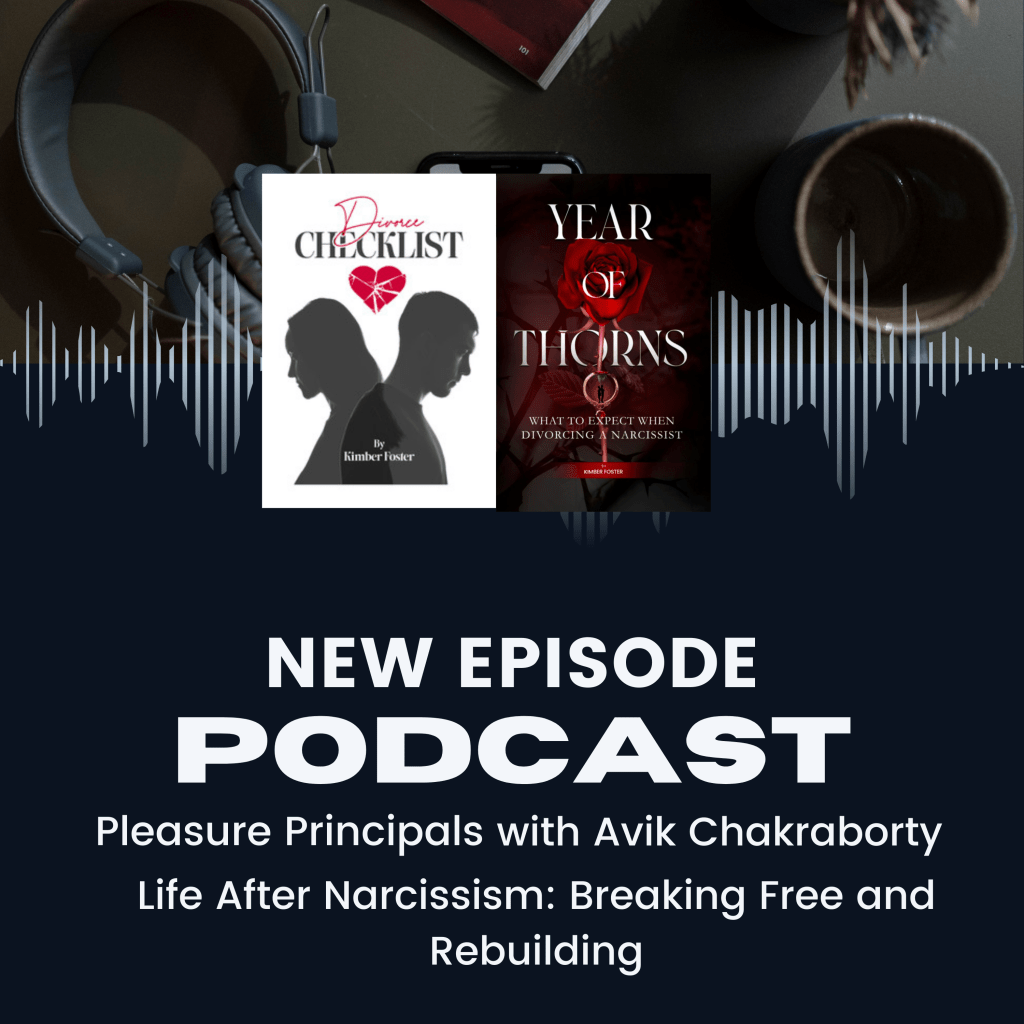
Pleasure Principles Podcast: Life After Narcissism: Breaking Free and Rebuilding – Kimber Foster

Kimber Foster’s voice trembles slightly as she recounts the moment she knew she had to escape her narcissistic marriage. “He told me he would destroy me, leave me with nothing, turn the kids against me…” It wasn’t just emotional survival at stake—her very sense of self had been systematically dismantled over years of psychological manipulation.

This powerful conversation dives deep into the mechanics of narcissistic abuse, examining the 17 distinct manipulation tactics Wendy identified through her own traumatic experience. From the initial “honeymoon phase” where narcissists morph into your perfect partner, to the gradual erosion of boundaries, self-worth, and reality itself, Kimber Foster walks us through the playbook used by these master manipulators. Her insights on gaslighting, projection, and isolation reveal how victims find themselves trapped on what she calls “the crazy wheel”—a disorienting cycle where you’re constantly questioning your own perceptions and worth.

The most valuable aspects of our discussion focus on the practical steps for breaking free, especially when children are involved. Kimber shares the divorce checklist she created (available as a free download through our show notes), which covers everything from financial preparation to establishing safe communication channels. Perhaps most importantly, she offers hope to those still trapped, emphasizing that healing isn’t just about escaping—it’s about rediscovering joy, pleasure, and a renewed sense of self after years of survival mode. “Don’t let fear hold you back,” she urges. “Believe and trust in yourself and move forward.” For anyone who has felt the suffocating control of a toxic relationship, this conversation serves as both validation and roadmap toward freedom.

Listen by clicking here:

https://www.buzzsprout.com/2408840/episodes/16839311

Must Listen Episode: Murder, Blood & Psychopaths

It was a pleasure to be a guest on Murder, Blood and Psychopaths Podcast – Episode 97. See link below to listen.

⭐️⭐️⭐️⭐️⭐️ A Must-Listen Episode with Kimber Foster! Kimber Foster was an absolutely phenomenal guest on MBPodcast! Her firsthand account of marrying, divorcing, and still dealing with a narcissist was raw, eye-opening, and deeply impactful. She brought a rare mix of vulnerability and strength, offering not only her personal journey but also valuable insights and survival strategies for anyone navigating a toxic relationship. Her ability to articulate the emotional and psychological toll of narcissistic abuse while providing practical guidance made for an unforgettable episode. Kimber didn’t just share her story—she empowered listeners with the tools to recognize red flags, break free, and rebuild. If you or someone you know has ever dealt with a narcissist, this episode is a must-listen. We highly recommend her book A Year of Thorns and the invaluable resources she offers. Thank you, Kimber, for your courage and wisdom! 🔥👏 #Survival #Empowerment #NarcissisticAbuse #MBPodcasts

https://sites.libsyn.com/413645/site/episode-97-surviving-a-narcissists-grip-kimber-fosters-story

MBP (Murder, Blood, and Psychopaths): Episode 97: Surviving a Narcissist’s Grip: Kimber Foster’s Story

MBP (Murder, Blood, and Psychopaths): Episode 97: Surviving a Narcissist’s Grip: Kimber Foster’s StoryPodcast Title: Murder, Blood, and Psychopaths – Episode 97: Surviving a Narcissist’s Grip: Kimber Foster’s Story this gripping episode of Murder, Blood, and Psychopaths, we welcome Kimber Foster, author of A Year of Thorns: What to Expect

From Fear to Freedom: Breaking Free from Toxic Relationships with Kimber Foster

In this compelling episode of Healthy Mind, Healthy Life, host Avik Chakraborty sits down with Kimber Foster, author of A Year of Thorns: What to Expect When Divorcing a Narcissist. Kimber shares her inspiring journey of surviving and escaping a toxic 27-year marriage, offering raw and unfiltered insights into reclaiming identity, joy, and freedom. Together, they explore the emotional and psychological challenges of leaving a toxic relationship, the impact on mental health, and the courageous steps required to move forward. Whether you’re navigating a toxic relationship, recovering from its aftermath, or simply seeking stories of resilience, this episode provides valuable lessons and hope for building a healthier, more fulfilling future.

About the Guest Kimber is an author, advocate, and survivor whose story embodies resilience and healing. After enduring a 27-year toxic marriage and reclaiming her life, Kimber authored A Year of Thorns: What to Expect When Divorcing a Narcissist, a powerful guide for those escaping the grip of toxic relationships. With a mission to inspire and empower others, Kimber openly shares her journey to freedom, focusing on overcoming fear, rebuilding self-worth, and fostering personal growth.

Key Takeaways Recognizing Toxicity: Kimber likens her experience to the “boiling frog” analogy, highlighting how gradual exposure to toxicity can desensitize and trap individuals in unhealthy relationships. Why Leaving Feels Harder Than Staying: Fear of the unknown, fear of change, and fear of being alone are significant barriers to leaving a toxic relationship. Kimber emphasizes that staying is a choice to remain in the cycle of pain and suffering. Impact on Health: Living in a constant state of fear and stress takes a toll on physical and emotional health, creating a “fight or flight” cycle that stifles growth and well-being. The Courage to Break Free: Kimber advocates for pushing beyond the comfort zone, embracing courage, and stepping into the unknown to unlock personal freedom and potential. The Role of Resilience: Struggles and challenges can become a source of strength and growth. Kimber reminds listeners that adversity shapes and prepares us for a more empowered future. Empowering Others: Kimber’s journey serves as a beacon of hope for those trapped in toxic relationships, showing that healing, joy, and a new beginning are possible with courage and determination. This episode is a must-listen for anyone seeking inspiration and tools to reclaim their life and find freedom.

https://www.podbean.com/pu/pbblog-gzsmf-108a023

https://www.podbean.com/ew/pb-vyxyt-1763851

3 Key Tips to Break Free from a Toxic Relationship

  1. Overcome Fear
  • What you’re not changing, you’re choosing. Every day you stay in a toxic relationship, you’re choosing to remain in a cycle of pain and suffering. You have the power to change that.
  • Fear is what keeps you stuck. The fear of the unknown, the fear of change, and even the fear of being alone can feel overwhelming, but they will keep you trapped in a situation that isn’t serving you. You cannot grow in an environment of constant fear.
  • You can’t become who you’re meant to be while living in fear. Breaking free requires courage, but it’s a step toward reclaiming your true self. You cannot evolve or heal if you are constantly in a state of survival.
  • Push beyond the boundaries of your comfort zone. It might feel impossible, but the discomfort you feel now will be worth it when you’re living your life on your own terms. Change begins when you’re willing to face that fear head-on.
  • Be honest with yourself. The first step in breaking free is acknowledging the truth of your situation. Stop minimizing the toxic behaviors, and be real about what you’re enduring. The path to healing starts with self-honesty.

2. Be Prepared

  • Protect your finances and belongings. Secure important documents, set aside emergency funds, and take anything that matters to you. Preparation can make your escape easier when the time comes.
  • Know your legal rights. Consult a lawyer and get informed about your rights, especially if there are children, shared assets, or legal matters involved. This will give you the confidence to take action when you’re ready.
  • Have a safe place in mind. Whether it’s a friend, family member, or a shelter, know where you can go if things escalate. Having a backup plan ensures that you’re not caught off guard when you need to leave quickly.

3. Believe in Yourself

  • Trust your feelings. Toxic relationships often make you question your own reality, but your feelings are valid. You deserve clarity, peace, and a relationship that lifts you up, not tears you down.
  • You deserve kindness and happiness. You are worthy of love that respects and values you. Don’t settle for less. Break free and create the space for joy, healing, and positivity to enter your life.
  • You are strong. You’ve already shown incredible courage by considering breaking free. Trust your strength and keep going—each step you take brings you closer to a brighter, healthier future full of rainbows.

You are a survivor and a thriver—this experience has taught you invaluable lessons that will make you stronger, wiser, and more resilient. You have everything you need within you to break free, heal, and step into the life you truly deserve. The best is yet to come, and it’s yours for the taking.

What’s keeping you from taking that first step?

10 Early Signs of a Narcissistic Relationship

Early warning signs (Red Flags) in a relationship with a narcissist can include:

  1. Excessive Charm and Flattery: At the beginning, a narcissist may shower you with compliments and attention to win your trust and admiration quickly.
  2. Lack of Empathy: They are unable to genuinely empathize with others, which can become evident when they seem indifferent to your emotions or the emotions of others.
  3. Need for Control: They often want to control the relationship and your actions, making decisions for you or overriding your opinions and preferences.
  4. Boundary Violations: Disregarding your personal boundaries or trying to test them early on is a common trait.
  5. Grandiosity: They may often talk about their achievements or fantasies of unlimited success and power, expecting admiration for their perceived superiority.
  6. Manipulation: Narcissists might manipulate situations to their advantage, making you feel as if your feelings or desires are unimportant.
  7. Sense of Entitlement: They believe they deserve special treatment or privileges and may become angry if they do not get what they want.
  8. Gaslighting: This involves making you doubt your perceptions or reality, often making you feel confused or questioning your own sanity.
  9. Constant Seeking of Validation: They often seek constant validation and approval from others to bolster their self-esteem.
  10. Quick to Anger: Any perceived slight or criticism can lead to anger, and they may react harshly to maintain their self-image.

If I Could Speak to Myself from 10 Years Ago…

Dear Younger Me,

I know you’re in a place right now where confusion and doubt are part of your daily life. You’re questioning yourself because the one person who is supposed to love you makes you feel like you’re crazy. But hear me when I say this, “You are not crazy. Your feelings deserve recognition, and your reality is valid.”

Breaking free from a toxic relationship, especially with someone who exhibits narcissistic traits, is daunting, but it’s essential. You’re not losing your mind; you’re losing yourself in this destructive cycle. The manipulation, the gaslighting, the constant need to cater to someone who loves only what you can do for them, not you as a person—it’s taking its toll.

You need to know this earlier: he will never change. His love is conditional and transactional, bound by what he can gain, not by genuine affection or respect. Staying in this relationship, thinking it might be better for the children, is misleading. Children soak up their environments more than we realize. They are learning what a dysfunctional relationship looks like, potentially setting them up for similar patterns in their own lives.

It’s okay to prioritize your mental and emotional health. Setting boundaries will not make you a villain but rather a protector of your peace. Recognize that you deserve respect from your husband, as do all people who share their lives so intimately. It’s not selfish to want a life where you are seen and valued for who you are, not just what you provide or endure.

Reflecting on this, consider this your action plan:

  1. Acknowledge: Accept that your situation is not your fault. Acknowledging the reality without blame helps you reclaim your power.
  2. Set Boundaries: Practice saying no. No to behaviors that are hurtful, no to blame that isn’t yours, and yes to your autonomy.
  3. Prioritize Self-Care: Your well-being is crucial. Seek therapy, join support groups, do whatever it takes to build a safety net of care around yourself.
  4. Make the Tough Decisions: Know that leaving may be hard, but sometimes the hardest decisions are the ones that set us free.

I believe in your strength to break the cycle. You are resilient, and your life beyond this relationship is filled with peace and respect. Don’t allow fear to be your captor; let it fuel your strength and courage to change course.

With all the love and understanding that comes from hindsight,

Your Future Self

Narcissist Apocalypse Podcast – EMOTIONAL & PSYCHOLOGICAL ABUSE EPISODE 454

In this episode of Narcissist Apocalypse, Kimber shares her story of marrying an emotionally & physically abusive narcissist. When Kimber met her husband, they were both young and looking to make something of themselves. However, soon after they married, red flags began popping up everywhere. Kimber took her vows seriously and believed the lies of her husband when he said his rages and addictions would never happen again. But those were only words, and something worse was lurking beneath as Kimber had to endure years and years of emotional and physical abuse until she was finally able to break free.

It’s a story of belittling, rage, infidelity, intimidation, smashing property, gambling, isolation, control , guilt, double standards, verbal abuse, not being good enough, blame, financial abuse, gaslighting, Jekyl &Hyde, walking on eggshells, suicide attempts, physical abuse, stalking, divorce, protection orders, physical symptoms, and boundaries.

Year of Thorns: Dealing with Narcissistic Manipulation – Book Review

I am truly thankful for the one-star review of my book listed below, “Year of Thorns: What to Expect When Divorcing a Narcissist.” This review succinctly captures all 17 manipulative tactics of a narcissist in one paragraph. Their attempt to (Smear), sway others (Third-Party Reinforcements) and (Project) what are clearly their own insecurities needing the get the last word in.  Starting with the Name:  “Discerning Eye” (Stalking).  “Tragic Clown” (Verbal Abuse). Claims that I was the one “rejected” (Fear of Abandonment & Altered Reality). “Mention of children” (Guilt and Parental Alienation). “Dog could write better” (Devaluing). Next books in the series – “personally responsible & evolve” (The Mirror Effect) and finally my personal favorite – “bitter  & alone” (Judgement & Shame). Thank you Discerning Eye. It only validates my story and gives meaning to what I endured so that I may help others moving forward. #happyandlivingmybestlife

The Discerning Eye

1.0 out of 5 stars Dumb. Don’t bother. Reviewed in the United States on May 29, 2024, Amazon

“Visualize a tragic clown vomiting on paper. This book wreaks of pent up revenge fantasies fueled by rejection. If every person that ends up divorced did this, we would be killing trees for zero purpose. Tragic mostly for the kids that have to be subjected to their parent ranting like this about the other parent. For every book like this there should be a counter book from the other party. My dog can be an author if this is the standard. My vote for the next book in the series would be “How to Become Personally Responsible and Evolve” or “Top 10 Ways to Not End Up Bitter & Alone”.

Year of Thorns: Unveiling a Universal Story of Struggle and Healing

I’m bursting with excitement to share some truly thrilling news with you. After years of unwavering dedication, soul-searching, and sheer determination, the book I’ve poured my heart and soul into is finally ready to grace the shelves. This isn’t just any ordinary project for me; it’s a profoundly personal narrative that delves deep into the intricate journey of my family.

Let me assure you right from the start that my intention in writing this book was never to cast shadows or pry into private family matters. Quite the opposite, actually. My sole aim has always been to share my experiences with the hope of offering solace and guidance to others navigating similar challenges.

In order to safeguard everyone’s privacy and uphold our family’s boundaries, I’ve chosen to adopt a pen name and alter the identities of the characters within the book. My utmost wish is for this tale to be a wellspring of hope and understanding, without causing any discomfort to my cherished ones.

This decision wasn’t taken lightly. It was born from deep reflection and a genuine desire to liberate myself from past pain and dysfunction. I firmly believe that by openly addressing our struggles, we can pave the way for healing and growth, not only for ourselves but for generations to come.

It took me six years to complete this book. I’m no professional writer, but I felt an undeniable compulsion to share my story. It consumed me, spending eight or more hours a day writing, reading, and researching, trying to unravel how I found myself in that place in my life. Through my research, I came to realize that my story wasn’t unique; it was universal. How did I not see it all those years, despite considering myself pretty smart, even with a degree in psychology! Words cannot fully express the intense need and obsession I felt to share what I had learned along the way. However, this obsession took its toll, and I had to take a break from the manuscript for a few years while I focused on myself, relocating and rediscovering joy.

The thought of perpetuating a cycle of dysfunction within our family, particularly knowing its impact on my own children, was simply unbearable. My hope is that by sharing my story, I can contribute to a future where love, understanding, and compassion prevail.

I also created a “Divorce Checklist” available on Amazon/Kindle which offers a comprehensive guide of what to include in your Judgement of Divorce leaving no stone unturned. This guide will empower you to advocate for yourself and secure your future, helping to manage both the emotional, logistical and financial complexities of divorce.

As my book and checklist are released, I hope you’ll grasp the truth I aim to convey and understand the necessity I felt in sharing it. Just as my pastor/prophet suggested, I believe my purpose is to share my story to assist others on their journey. To all who supported me during my “Year of Thorns,” I extend heartfelt gratitude for your love and encouragement that gave me the strength to persevere.

Stay tuned for the Kindle/Amazon release – link coming soon! Year of Thorns By Kimber Foster

Emotional Manipulation Tactic #12 – Fear

grayscale photography of human skull

Photo by ahmed adly on Pexels.com

Fear can be paralyzing, especially when we are stepping into the unknown. It’s one thing to think about making changes in your life (divorce). Or even deciding to make changes (to leave). But the real kicker comes when it’s time actually to make those changes happen (to move out). And that, my friend, is where all of us run smack into fear. It can be totally paralyzng. The Narcissist FEED on that fear, making you believe that you can’t make it on your own, that you’re not worthy. Then there’s the fear of what if’s. Can I make a living? How long will the divorce process take? Is it best for the children? Can I afford the fight? You can bet your last dollar that the narcissist will threaten to take away the children, threaten to leave you with nothing and tell you that no one will ever love you again.  

He made me the victim, and my acceptance of that role allowed him to keep his control over me. He projected his issues onto me, leaving a husk of the person I used to be, to feed his ego. I didn’t see through his ruses. I didn’t call them out fearful of his repercussions. I allowed his behavior to go unchecked by not actively taking a stand against it — and for a good reason. When I did stand up to him, he punished me, abusing me both verbally and physically. I failed from the beginning to set proper boundaries.

I was also afraid of being alone, pure and simple.  Alienation was a significant factor why I stayed as long as I did. While living abroad for ten years having three small children including one with special needs, I couldn’t pack up and leave. We moved so frequently is was easy for him to alienate me from friends and family that supported me. I was also alienated financially, having given up my career to support him in all our moves. We relied solely on his income. My career was long gone. I was terrified at the thought of getting a job having been out of the workforce for so long with my skillset being significantly outdated, or so he made me believe. How would I support myself and my children?

His controlling and abusive behavior didn’t end when I finally found the courage to leave.  In fact, it got worse.  Much worse. I had no money of my own, and for the sake of the children, I was forced to stay in the marital home during the divorce process when he refused to leave.  I suffered through stalking, verbal and physical violence, hidden cameras, and  flamboyant and unpunished violations of court orders.  I lived in a House of Horrors and was imprisoned in a dungeon built by his malice

With the help of his greedy and unscrupulous lawyer, he coldly and masterfully orchestrated devastating attacks designed to make me look crazy and violent in attempts to get custody of the kids he hardly even knew.  The police were called to our home (10) times during our year of divorce.  He lied, cheated, and stole.  He staged more than (33) events and recorded them as false “evidence”.  He dragged me into a maelstrom of Machiavellian schemes designed to isolate me from everything I had known and loved.

But to his chagrin, I survived – thrived once free from his control!  Once I determined to knock those walls down, everything started to focus into a plan, albeit slowly testing my patience. I chose to jump out of that pot of boiling water and began to take control of my life. Yes, MY life – not his, not our kids, but MINE. By eliminating the ignorance of the “what ifs” and fear of the unknown, I began to eliminate the anguish allowing myself to make my own choices, move forward one battle at a time and change my life, piece by piece.

Once I accepted that fact and that I deserved better, then I could begin my road to recovery, feeding my spirit that so desperately wanted to be happy. I changed my thinking process entirely, working diligently to “Let Go” all those evil thoughts and memories that were conditioned in me, allowing me to accept MY truth and MY reality. I wasn’t crazy! I’m an amazing mother, and I did the best I could. No regrets. Move forward.

Hopefully readers, through my journey, learn a few things about the divorce process and that the only winners in this game were the attorneys. But I did win in some ways. By understanding my light bulb moment, I overcame my fear of leaving my invisible prison; I realized that I was abused by the person I loved, who truly didn’t love me back.  He wasn’t capable o loving me as a person; he only loved what I could do for him.

To this day, he continues to threaten me – to sue me over my Blog.  Once again, his perception is that the world (and my blog) are all about him.  However, according to the Judge during one of our numerous court hearings (three years later still continuing), that I have the constitutional right to tell my story, my truth.

And so I write, not to defame or disparage. I choose to share my experiences to inspire others how to break free of an abusive partner while learning to identify common manipulative tactics of the narcissistic type and how to deal with them.

It’s so crucial for women to speak their truth, which is the most powerful tool. By sharing my journey through my Year of Thorns, I hope inspires others like me to stand up to the injustice, bullies, and tyrants, who made us victims. Abuse in all forms is wrong.

If you’re in a toxic relationship, get out. It’s not healthy for you or the children. IT WILL NEVER GET BETTER!  For those out there who are depressed or scared in a toxic relationship and fearful of the unknown, know there’s hope at the end of the rainbow, even in the worst of times. Hold onto that inner spark of strength; have faith in your guardian angels; and listen to your inner spirit, who will guide you.

Slowly over time, you will began to identify their emotional manipulative tactics.  YOU will learn not to engage or accept those devaluing messages thrown your way. As long as you stay true to yourself, your beliefs and all that you hold to be true in your heart, YOU will find power in your passion. YOU will be victorious, independent and free no longer harnessed by fear or control!

In Steve Maraboli’s Unapologetically You, he writes “We all make mistakes, have struggles, and even regret things in our past. But you are not your mistakes, you are not your struggles, you are here and now with the power to shape your day and your future. You only get one life.”

As you gain clarity about who you truly are, not by how others define you, you can become who you are meant to be.  As Oprah once said, “You don’t become what you want. You become what you believe.” Believe in yourself.

Emotional Manipulation #5 – Guilt Trip 

photography of a person pointing on something

Photo by Lukas on Pexels.com

Narcissists are able to manipulate others so well because they are continually on the lookout for our vulnerabilities.  Once they hone in on what’s important to you, they will use those things against us.  Some examples of vulnerabilities might be our children, any self-esteem issues or insecurities we might have (weight, appearance, etc.), or fears – such as being alone or threats of violating court orders and finances in my case.  Money was a major issue during our divorce.

The narcissistic psychopath will place a guilt trip on you when they want you to do something for them. They will make note of all the sacrifices they have made for you, the gestures they have made for you, and any minuscule compliment they have paid you. Your actions should be in recognition and repayment of those things. And when you refuse to comply or pay up, they claim it is your fault, with no other choice available but to comply and wield to their wishes. 

It’s all your fault.  Somehow in someway, his cheating, lying, and other bad behavior is also your fault.  Perhaps he’s telling you that you needed to be home more, or to spend more time with him, lose weight, gain weight, dress sexier, dress less sexy–whatever.  According to him, his behavior is your fault. (This is the classic, “Look at what you made me do.”)

I can remember one perfect example where my narcissistic partner used guilt as his weapon of choice to get me to wield to his will.  We were living in the same house during our divorce.  Regardless of our agreement that we would each have our own separate bedrooms; he hated losing that one piece of control over me.  He would constantly pick my bedroom lock breaking in, insisting it was HIS house, HIS room, and HE should have access to my bedroom anytime HE wished.  So after numerous times of my privacy being invaded, I had hired a locksmith and installed a pick-proof lock.

I had planned to get away for a few days, leaving for the weekend.  Prior to my departure, my narcissistic partner insisted that I leave my bedroom door unlocked, providing him full access. Using guilt as an emotional tactic he stated, “If you don’t leave the door open when you leave, I will call a locksmith and personally charge you the $300 that it cost to open it.”  He was going to charge me for HIS breaking into my bedroom!

He knew I was concerned about the finances.  His spending was out of control. Yet, every minute of every day he was claiming that I was the one violating the court’s status quo order, holding threats of motions over me.    Pouncing on my vulnerability and fears, I fell for his guilt trip hook, line and sinker.  I welded to his wishes and left my door unlocked. He had guilted me into thinking it was my fault he had to hire a locksmith to break into my personal bedroom!

He also tried many times after that to punish me using guilt where our children were concerned. After various court appearances, regardless of his illegal activities and high priced attorney, it was my fault he was spending so much money on our divorce.  Then telling our son he could no longer afford to help with his rent one week before it was due because it was my fault.

The same day we signed our settlement agreement, after much negotiation, he stated “I hope you’re happy, I can’t afford to support our children’s education because of you.”  When I wouldn’t agree to his demands, he followed through on his threats telling the children all their college funds were gone because again it was apparently all my fault.

Deep down I knew it wasn’t true, but he had hit below the belt where it hurt most – our kids.  And he would continue to do so over the months that followed, trying to guilt me especially where our children were concerned.  He stayed true to his threats over the years, that if I ever left he would leave me with nothing, and turn my own children against me.  He certainly tried.  Alienation and disparagement are also common tactics the narcissist commonly use.

Once you learn these manipulative tactics, they’re easy to spot.  However, not always easy to control your way of responding to those actions that have been conditioned over the years. Especially when they prey upon your fears and vulnerabilities.  Stay true to what you know – what you feel is your truth.  And as I quote Disney’s Elsa “Let it go” as best you can.  You’re not crazy or delusional.  You have a right to your own opinions, beliefs and integrity.  Believe in yourself.


Emotional Manipulation #4 – Setting Smoke Screens

blue and white smoke digital wallpaper

Photo by Rafael Guajardo on Pexels.com

Narcissist throw a smoke screen over whatever it is that you bring up and use another issue as a diversion from the actual topic. Narcissist don’t want you to be on the topic of holding them accountable.  If you really want to talk about the issue that’s bothering you, you’ll have to  continually try to get back to the subject at hand, which is difficult in the first place.  And then of course there’s the fear of  their reaction.  

When I confronted the narcissist about anything, he would change the subject or make everything seem like a joke.  On one occasion during our divorce, after his constant invasions of my personal space I asked him, “Why do you keep breaking into my room and going through my personal files?” 

The Narcissist replied, “You’re the one that abandoned the family,” completely changing the subject in attempt to shift the blame. If I complained about his neglectful parenting, he would point out a mistake or event that happened years ago.   Somehow he would turn the tables on me.  

When I asked the narcissist about his non-status quo purchases during our divorce, he replied, “Why don’t you get a job so you can pay for all your drinking with your new boyfriend.” I wasn’t out drinking and I didn’t have a boyfriend at the time.  It was frustrating to say the least.  But over time I began to learn and recognize the pattern and his smoke screens.    It’s not me.  I’m not crazy.  

I also learned there’s no arguing with the silver tongued devil.  I would never win, nor would I ever get the answers to my questions through his smoke and mirrors.

Certified Financial Divorce Advisor (CDFA)

money pink coins pig

Photo by Skitterphoto on Pexels.com

January Journal Continued  . . .

It was time to put my support team together.  After loads of research I learned there was such a thing as a Certified Financial Divorce Advisor.  That was exactly what I needed. I was still working on the hundreds of interrogatory questions and needed help, especially with the financial portion.  And so I hired a Renee, and asked her to review our taxes since, when living abroad, were very complex.  Scott’s company had provided the firm KPMG to prepare them annually. And I had many, many questions.

CDFA

The role of a Certified Divorce Financial Advisor (CDFA) is to assist the client and lawyer how the financial decisions made today will impact the client’s future.  And, after divorce how to best position your assets.

Back when we lived in Puerto Rico, Scott told me that KPMG had miscalculated our taxes as part of the tax equalization process and we owed $60,000.  I was shocked.  That was nearly our entire savings and we supposedly had to pay that money back to The Company. In all the years since, it never sat right with me.  Our taxes had always been around just a few thousand dollars that we either owed or received in return, not $60,000!  And the check for the payment was written to our local bank, not to the IRS, not to The Company.  When I had questioned Scott about it then, I was dismissed.  Scott said, “You don’t understand finances. You’re stupid when it comes to numbers.  You don’t know what you’re talking about.”  So now I asked Renee to look for that transaction and documentation.  Nothing.  I then asked my attorney, Bob, to add that to a second set of interrogatory questions for Scott.  

When Scott saw I’d hired the CDFA (using our joint accounts), in retaliation he began bombarding me with requests for my business records and receipts.  I crafted as a hobby and for stress relief.  I was crafting like crazy at the time!  Sometimes I would sell my wares at craft shows.  I spent more on supplies then what I made back in sales.  But Scott always refused to claim my income, concerned that it would raise red flags with the IRS.  Then Scott accused me stating, “I know you’re hiding money.  You’re a spending whore,” amongst other choice insults.  My hiring Renee spooked Scott — he was unusually assertive and angry. 

Renee was a huge help.  But I never got the answer about the missing $60,000 from Puerto Rico.  All of our Puerto Rico bank statements also mysteriously disappeared at that time during the divorce. We even went so far as to subpoena the Puerto Rican Banks. They refused to respond stating they were a US territory and needn’t comply with US rules and regulations.  Later I also hired a PI – to look for hidden funds.  Just for a domestic sweep (within the US) cost $750.  To do an international sweep I was told would cost thousands – thousands I didn’t have access to at the time.  I’m sure Scott got away with it all.  Living internationally, it was easy for Scott to stash cash.


Chicago Bound

river between trees and city skyscrapers

Photo by heather bozman on Pexels.com

January Journal Continued . . . 

I needed a break and I needed to get my finances in order which meant meeting with our bank branch in Chicago. Road trip time.  For the first time in months I actually smiled and felt a thousand pounds lighter leaving behind all that baggage — and Scott.  I couldn’t wait to be free.

Before I left, Scott sent a text demanding I leave the master bedroom door unlocked.  It was His room, His bed.  Of course I refused.  I hadn’t worked hours upon hours moving all his belonging to the guest room for no reason.  Who knows what he would do now – possibly start selling off my jewelry?  Hack my files?  Who knows! His erratic behavior and outburst were anything but status quo. Scott scared me. And he didn’t like it when I didn’t obey his demands.

Another text from Scott followed with, “Don’t tell anyone while on your ‘visit’ that we’re getting divorced.  It may impact my career.” I’m sure Scott doesn’t want me telling any of our friends about our impending divorce.  Besides, I don’t believe for one moment that a major Fortune 500 company will fire an employee for getting divorced.  It was all about his ego, and Scott’s need to maintain the perfect image.

Secret Mission

I went to stay with our friends Tim and Alyssa Johnson.  We met 26 years ago when Scott started working for “The Cereal Company” the same time as Tim.  They have continued to be our dear friends ever since. We visited them constantly over the years after we moved away.  They even managed to visit us while living abroad in both Ireland and the Caribbean. 

Now while staying with them in Chicago, I confided in Alyssa about the divorce.  She wasn’t surprised having known us for so many years and the struggles I’ve endured.  I asked her not to tell her husband, Tim, initially about the divorce.  First, I wanted to quiz him about the various savings and investment plans The Company offered.  Tim was close to the same level in The Company as Scott and I needed to know exactly what investments that entailed. So, over the next few days I cleverly worked in various questions about the plans and retirement programs that they were both participating in and took meticulous notes.  

Inside Scoop

Shortly after filing for divorce I’d reached out to another Company wife, Kim who had recently signed her Judgment of Divorce.  She had a difficult divorce as well, and warned me early on, even bringing me a journal instructing me to write down everything during the process. I am forever grateful to Kim for her advice and gift that day.  It’s the same journal I am referring to now.  She indicated that her ex-husband had failed to disclose a few of those retirement plans during their divorce. To her dismay, there was nothing she could do now to recoup those lost funds.  Knowing what had happened to Kim, I wasn’t about to let that happen to me as well and so I drilled Tim for information as best I could.

Retaliation 

Scott continued to inundate me with messages while I was in Chicago, now proclaiming that he was taking the kids to Florida for spring break among other things.  We had discussed this before and had agreed that, because our daughter had won the state competition for DECA, she was going to go to California for the national competition.  We simply couldn’t afford to do both.  Besides, we had agreed that she couldn’t take that much time away from both her high school and college classes. Scott just wants to punish me for going to Chicago. It was ok for him to travel and go on numerous “guy trips” each year.  But not ok for me to even take a weekend away.  That was his retaliation.  

(Scott claimed later that every time I left the house I was abandoning the family – even when I would drive an hour away to meet with my attorney.  He would state this repeatedly in our child custody and arbitration hearings.)

I spent a few blissful days with the Johnson’s free from obligations and divorce able to exercise my free will and just go with it.  I can’t remember the last time I did that.  I also made the rounds and visited a few other friends from the old neighborhood where we used to live in the Chicago suburbs.  Finally I met with our banking account executive and got access to the accounts online and a working ATM card. I informed him of our divorce and asked that he alert me if Scott made any other changes to our account. 

(I am surprised that our bank neglected to inform me that Scott had made special arrangements to cash out our E*Trade stocks at that local branch receiving $71,000 in cash just a few days prior.)

Moving Day

close up of row

Photo by Pixabay on Pexels.com

January Journal Continued . . . 

I was exhausted by Scott’s continuous efforts to pick my bedroom lock, always having some lame excuse; claiming he needed access to the thermostat, the medicine in the cupboard or something else.  Our therapist Sally reached out to him, reminding Scott of our agreement that he would reside in the guest room. Finally forced to acknowledge our agreement, he was now procrastinating moving his stuff to the guest room stating he didn’t have time due to work constraints.

I couldn’t take another sleepless night by that point, and so that morning I proclaimed it moving day.    I called a locksmith who assured me that the new lock he installed was “pick-proof.”  After the locksmith left, since Scott refused to move his belongings to the guest room, out of the kindness of my heart (and for my sanity) I moved everything.

Initially I considered throwing everything out the windows like you see on TV. But that would mean violating the MSQ/MRO orders if I removed anything of his from the house.  Instead, I packed up Scott’s clothes and personal items and moved them to the basement, two floors below, taking one step at a time.  Stairs were difficult since my second knee replacement revision.  It took me hours and many, many trips, but worth every bead of sweat to get him out of my personal space. Being a bit obsessive-compulsive, I actually color-coordinated all of his hanging clothes and put the others neatly in the dressers.  Anything that didn’t fit or wasn’t seasonal I put into moving boxes and labeled each one accordingly. I then wrote Scott a letter and posted it on the master bedroom door explaining my actions. I asked him to respect our agreement so we could move ahead peacefully and amicably. 

When Scott returned home later that evening and saw the new lock I had installed on my bedroom door, he lost it and angrily began banging on my bedroom door. I was thankful that both the children were away, and tried to ignore his temper tantrum as he shouted, “You have no right to move my stuff!”  Further adding “It’s my house and my bedroom!”  He accused me of violating the MSQ/MRO orders, even going so far as to make a copy of the Orders and sliding them under my bedroom door.  Imagine what would have happened had I thrown all his stuff out the window! 

I felt safe for the first time in a long, long while having the new lock in place. I slept well that night. But that didn’t last long.  

Scott would later claim in court that I  threw all his clothes down the stairs. Thankfully, I took photos of all of his items that I had neatly moved, hung and put away.

Now What?

anniversary beautiful birthday bloom

Photo by Nubia Navarro (nubikini) on Pexels.com

December 28th – (After my lightbulb moment) Happy Anniversary

Once I made the conscious to decision to leave Scott, letting the hotel screen door slam as I walked out, I wiped my tears and pulled myself together.

I was eerily calm riding in the back of the beat up old Uber van. The driver barely spoke English and couldn’t find the hotel I booked last minute. I had called my brother, who has a place in Marco Island. He said I could stay with him for a few days while I figure out next steps. So I picked a hotel midway between Sanibel Island and Marco, near the airport in Naples where my brother graciously offered to pick me up in the morning.

After Scott left me in full panic mode in that small hotel room to go have dinner with his mother and kids, his last words echoed over and over. “Suit yourself. You’re being selfish. You’re overreacting. You’re a horrible wife and mother. How dare you abandon your family. You’re a fucking psycho bitch.” Plus much, much more. Happy Anniversary.

Then the messages started rolling in from Scott. Most would think your partner of 30 years would be worried. Show concern. Ask if I was ok. Beg me to come back. Or, even give me space to breath. Nope. Instead I was inundated with hateful, spiteful, messages. Even lists. List of all the times he ‘claims’ I left the family. Lists of times he claimed I overreacted. Lists upon lists of mean, hurtful, hateful words.

It was abuse – verbal and mental abuse at its finest. I’d already come to recognize the signs having read Patricia Evans “The Verbally Abusive Relationship” that really started it all on my path to understanding and breaking free. (If you haven’t read it, you should.) More on that to follow.

Both Scott and the kids had the following week off for “winter break.” So, I knew I wouldn’t be putting a burden on anyone with my absence. I just couldn’t fathom getting on that plane tomorrow. It’s difficult to explain how strong the feeling was — like a lightening bolt hitting me with complete clarity. Call it sick sense, panic attack, divine intervention, who knows. I had no doubt whatsoever I was doing the right thing. I knew I had to make a change and now. My life depended on it.

It didn’t really hit me until the kids called after their dinner. They wanted to know where I went. All I could think to say was that I wasn’t feeling well and decided to stay with my brother and family in Florida for a few more days while they headed back to the arctic tundra where we now reside in Michigan.

Now in the airport hotel room, the tears began to flow. This time in great waves. I cried for my children. I had stayed in this marriage thinking that by keeping the family unit intact, I was helping them.  Instead, I was doing the opposite.  I had hoped this vacation would bring us all closer together.  But it only verified what I knew to be true but couldn’t accept; our family was dysfunctional.  That’s not the message I want our children growing up with any longer.

I cried that my marriage had come to an end. The very foundation of my marriage was broken and couldn’t be fixed.  That became abundantly clear when my knight in shining armor wouldn’t go to battle for me.  He didn’t want to put a mark on that glossy veneer.  Scott’s threats over the years haunted me. He said he would destroy me if I ever found the courage to leave. And I believed him.  I cried because I was scared as hell. Now what?

Why stay in a relationship that is toxic?


Why Did I Stay? 

Why did I stay despite everything?  Many of us get into unhealthy situations because our partners held up a facade. I felt I had met my soul mate — that one special person in the universe just for me. It’s no surprise that I fell in love with someone like that! Scott once seemed perfect, but once I was married the relationship changed slowly over time due to children being born, job changes, and other major life changes.  Eventually I began to see a completely different side of him.  It was clear that I had married Dr. Jekyll and was living with Mr. Hyde, or the Supreme Being. The person who once seemed perfect became an angry, demeaning, demanding, and harshly critical narcissistic psychopath.  Sure there were warning signs from the very beginning, but I was in love and felt an obligation to stay. Plus the sex was off the charts.

For most people in abusive relationships, we carry around with us internal obligations that tend to make us want to stay in the relationship. One being the feeling of love for our partner. These feelings can persist and be very strong even when our partner doesn’t give or show us love in return.  We stay because of the few crumbs fed to us along the way with words of affirmation and/or actions along the way.  Like a carrot dangling at the end of a rope.  The second is a feeling of responsibility and obligation to our partner, our family, and even others beyond that. Our disordered partners often work hard to build up this feeling of obligation, hoping it will keep us locked in despite the way they mistreat us. 

I also stayed because of the way Scott’s manipulative behavior effected how I viewed myself.  He made me the victim, and my acceptance of that role allowed Scott to keep his control over me.  Scott projected his issues onto me, leaving a husk of the person I used to be, to feed his ego. I didn’t see through Scott’s ruses.  I didn’t call them out fearful of his repercussions.  I allowed Scott’s behavior to go unchecked by not actively taking a stand against it — and for good reason.  When I did stand up to Scott, he punished me, abusing me both verbally and physically.  I failed from the beginning to set proper boundaries. 

 Scott started the negative comments and hammered them home until I believed it entirely. When you start to feel so low and worthless, you genuinely believe that they are your best option. You believe that no one else will ever love or accept you because that’s what they’ve conditioned you to think – even friends won’t accept you. Because of that, you fear the thought of being alone (one of my greatest fears).  You think no one else will fill the gap in your heart that has been pried wide open with manipulation and malicious criticism. You fear that all the insults and criticisms were true. I let harsh words and his poisoned opinions rule my thinking. 

Alienation was also a major factor why I didn’t leave. While living abroad for ten years having three small children including one with special needs, I just couldn’t pack up and leave. We moved so frequently it was easy for Scott to alienate me from friends and family that supported me. I was also alienated financially, having given up my career to support him in all our moves.  We relied solely on Scott’s income. My career was long gone.  I was terrified at the thought of getting a job having been out of the workforce for so long with my skillset being significantly outdated, or so he made me believe.  

The rest was fear, plain and simple.  Fear of the unknown and Scott’s continuous threats I’d heard so often:  if I ever left, he would leave me with nothing and ruin my relationship with the children.  Scott did exactly that.  But I did survive, and I hope that our children will one day come to understand his illness and forgive me for staying as long as I did in a toxic relationship that ultimately dragged them into the middle. 

We often stay in abusive relationships for reasons that are healthy, even though the situation isn’t.  Scott projected his insecurities as a detached parent onto me making me question my sanity and parenting abilities, the very thing that mattered to me the most. Then there was my internal conflict to keep the family unit intact for the children.  But soon I realized while my vows were pulling me in one direction, the need to care for myself and my children in the other direction had to be my priority. I had to save myself and my spirit if I was going to take care of our children, stopping this dysfunctional modeling, hoping they would learn what a healthy relationship is eventually. 

When we think about making major changes in our lives, our thoughts naturally go to the world around us. We not only want to do what is right in principle; we also want to do what others will approve of. I guess one of the things that surprised me most in my educational journey was how strong this feeling was for me. I was always a people pleaser, needing validation and social acceptance. I hated being alone. I was really carrying around a strong feeling that an awful lot of people would judge what I did, especially living in such a small community. Even writing my book/blog, I worried what others may think knowing what happened behind the closed doors of our seemingly perfect Facebook life. 

I felt shame and embarrassment; I never thought I would get divorced, no matter what Scott did to me.  I had to work hard to get a handle on this. In reality, people didn’t really care. The negative judgment from others really isn’t there. The thought that I am a good mother because I kept my family unit intact needed to be set aside, replaced with thoughts that are centered in more basic ideas. “I am a good mother” because I care about my children. Now I have the courage and ability to hopefully be a role model to my children. I want them to also be free from their father’s manipulation to truthfully assess the goodness of their lives. I am a “good person” because I love and care for myself, my children, and for others.  

It’s time to believe.

Believe . . .

To accept (something) as true; feel sure of the truth.  

Hold (something) as an opinion; think or suppose.  

Believe in yourself, your intuition, your courage, your strength, your future.


quote 2