When Life Changes in a Single Day

There are days when it feels like the world is ending.
Days when everything feels heavy, uncertain, and directionless.
Days when you wonder, Is this really my life? Is this all there is?

If you’ve lived through betrayal, control, or emotional erosion, those days aren’t rare—they’re familiar.

And then—almost without warning—everything changes.

A single phone call.
A chance meeting.
A quiet prayer spoken out loud.
A door you didn’t even know existed suddenly swings open.

It can feel like the flip of a switch.

I know this because I’ve lived it. And if you’re reading Year of Thorns, chances are you have too.

There was a day—one ordinary-looking day—that turned out to be the most consequential day of my life. It was the day I decided to leave. No fireworks. No applause. Just a bone-deep realization that staying was costing me more than leaving ever could.

That day felt like failure.
Like grief.
Like the end of everything I thought my life was supposed to be.

I didn’t know then that it was also the first day of my becoming.

When you leave a narcissistic or toxic relationship, there isn’t a clean break. There is fear. There is guilt. There is the terrifying question of Who am I without this person? And yet—somewhere beneath the wreckage—there is a small, steady voice saying, This is not the end. This is the beginning.

That single decision—made on the hardest day—changed the entire trajectory of my life.

I’ve seen this same quiet, divine alignment show up again recently, both in my own life and in my daughter’s. She became engaged to someone she hadn’t known for very long, and yet it felt unmistakable. Like a gift from heaven. A match made not by force or fear, but by peace. When you know, you know. No chaos. No convincing. Just certainty.

And then something similar happened to me.

One day, almost absentmindedly, I said out loud, “God, I just love flowers. I wish I could make a career out of this.” It wasn’t strategic. It wasn’t performative. It was a simple, honest longing—spoken without expectation.

The very next day, an amazing flower shop here in Naples called and offered me a job.

Just like that.

After years of survival mode—after living in a body trained to brace for impact—I suddenly found myself creating beauty. Getting paid to work with my hands. To breathe. To feel joy again. It felt like kismet. Like confirmation. Like the Good Lord whispering back, I heard you.

For so long, I had been standing at a crossroads, asking the same questions many women in Year of Thorns ask:
Where is my life going now? Can I trust myself again? Did I ruin everything—or did I save myself?

What I know now is this: the day you leave is not the day your life ends. It is the day the fog begins to lift.

You may not see the path yet. You may only see the wreckage behind you. But step by step, the road appears. Not all at once—but enough for the next right move.

Whether you call it God, divine timing, grace, or simply reclaiming your intuition—I believe there are moments when the universe meets us halfway. Not when we beg or force, but when we finally choose ourselves.

So this is a message of hope—for every woman still in the thorns.

Don’t give up.
Keep listening to that quiet inner voice.
Trust the longing in your heart—it survived for a reason.

Even on the day that feels like everything is falling apart, something beautiful may already be aligning behind the scenes.

Sometimes, the day you think your life is over…
is the very day it begins.


Trust: Is It Earned… or Lost?

Recently, something small happened that made me think about trust in a whole new way. I’m close with a couple friends who are in a brand-new relationship. They’re already living together, doing life side-by-side, making plans like a “we.” And then one of them wanted to take a girls’ vacation with me—two women, friends, having fun… a cruise, some sunshine, laughter, a little freedom.

Simple, right?

But I could feel something underneath it. Not spoken. Not dramatic. Just… a tension. Like one of them was okay with the trip, but not really okay. Like trust was being negotiated instead of assumed. Like “permission” was disguised as “communication.” And it made me pause, because I’ve been there. I know what it feels like when trust becomes a measurement instead of a foundation.

And it made me ask the question I’ve been turning over ever since:

Is trust something you earn… or something you lose once it’s freely given?

The Way I Used to Think About Trust

If I’m committing to you—emotionally, spiritually, physically—then I’m giving you my trust up front.

Not blindly. Not foolishly. But intentionally.

I’m saying:
“I’m choosing you. I believe in you. I’m not going to start us off like you’re guilty until proven innocent.”

To me, love without trust is just anxiety wearing a pretty dress.

So for years, I lived like this:

Trust is a gift. It’s yours to lose.

And honestly? I still believe that’s how healthy love starts.

But Then I Think About My Marriage…

And I have to sit with a harder truth:

Maybe I was too trusting.

I know now my husband cheated on me repeatedly. And I didn’t just “find out later.” There were signs. There were moments. There were things I questioned—scratch marks, missing time, stories that didn’t add up. Even my children noticed things that didn’t make sense. And every time I brought it up, there was an explanation.

A smooth one. A confident one. A believable one—if you wanted to believe it.

And the truth is… I did want to believe it.

Because the alternative was unbearable.

The alternative was admitting that the person I built my life around—my home, my family, my future—was lying to my face.

So why did I put up with it?

Why did I accept explanations my gut didn’t buy?

Why did I doubt myself instead of doubting the story?

Here’s the answer I keep coming back to:

Because I wanted love to be real.
Because I wanted my marriage to be safe.
Because I wanted my children to have the family I promised them.
Because hope can be stronger than evidence—until it breaks you.

And for many of us who have loved a narcissistic or emotionally manipulative partner, trust becomes more than trust.

It becomes a weapon used against you.

Trust vs. Blind Faith

This is the part we don’t talk about enough:

Trust isn’t supposed to require you to abandon yourself.

Real trust is not you swallowing your instincts.
It’s not you making excuses for someone else’s behavior.
It’s not you “being the bigger person” while you’re shrinking inside.

Trust and blind faith are not the same thing.

Blind faith says:
“I’ll believe you no matter what you show me.”

Trust says:
“I believe you… and I pay attention.”

Trust doesn’t mean you ignore red flags.
Trust means you notice them—and you address them with clarity, not fear.

So… Is Trust Earned or Freely Given?

I think the real answer is:

Both.

Trust is offered in the beginning—because love needs room to grow.
And trust is earned over time—because character is revealed through patterns.

In healthy relationships, it looks like this:

  • You start with openness, not suspicion.
  • You build security through consistency.
  • You repair quickly when something cracks.
  • You don’t punish each other with control.
  • You don’t demand “proof” of loyalty like a prison guard.

And in unhealthy relationships, it looks like this:

  • Trust is treated like a currency—used to manipulate.
  • Freedom is labeled “disrespect.”
  • Boundaries are interpreted as betrayal.
  • Jealousy is dressed up as love.
  • You start explaining yourself like you’re on trial.

What Do You Do When Trust Feels Shaky?

If trust feels shaky in a relationship—new or long-term—here are a few truths I wish someone had told me sooner:

1) Trust should never require isolation.
If someone tries to cut you off from friends, experiences, or joy… that isn’t love. That’s control.

2) Trust is built through behavior, not promises.
Words are easy. Patterns tell the truth.

3) Your nervous system knows before your brain admits it.
If you feel like you’re walking on eggshells, explaining, proving, shrinking… listen to that.

4) A trustworthy partner doesn’t fear your freedom.
They don’t need to monitor you. They don’t need to “approve” your life. They don’t need to be convinced you’re loyal—they trust what you’ve shown them.

5) If someone has past wounds, the work is healing—not policing.
Your partner can share their insecurities, but it’s not your job to live smaller so they can feel bigger.

The Lesson I’m Learning Now

Here’s where I’ve landed:

I still want to be a woman who trusts.

Not because people always deserve it—but because I refuse to let betrayal turn me into someone who leads with fear.

But I’m also a woman who trusts wisely now.

I no longer confuse “giving trust” with “ignoring truth.”
I no longer mistake love for loyalty to my own suffering.
And I no longer stay in situations that require me to betray myself to keep someone else comfortable.

Trust is not just something you give to someone else.

Trust is also something you give to you.

To your instincts.
To your boundaries.
To your knowing.
To the part of you that whispered the truth… even when you weren’t ready to hear it.

A Question to Leave You With

If you’ve ever been betrayed, lied to, manipulated, or gaslit—this might be the most powerful question you can ask:

What would my life look like if I trusted myself as much as I tried to trust them?

Because healing isn’t just learning to trust again.

Healing is learning who deserves access to your heart—and who doesn’t.

Healing Misunderstandings: A Mother’s Perspective

Recently, I listened to my daughter’s podcast and heard her describe me as an “emotionally unattached parent.”

Those words landed like a punch to the gut.

Not because I think I was a perfect mother—no such thing exists—but because everything in my heart, my memories, and my lived reality says I was the exact opposite.

The Mother I Know I Was

I was the mom who showed up.

I was at the doctor’s appointments, dentist visits, sports practices, games, school events, and plays. I read bedtime stories, tucked her in, and whispered “you are so loved” more times than I can count. I called her my sunshine because she truly lit up every room she walked into, and my world revolved around making sure she knew that. I was essentially a single parent.

While her father focused on his career and traveled most of the time, I gave up mine to fill in the gaps to be two parents in one—emotional anchor, cheerleader, driver, tutor, advocate, and safe place. I was juggling not just her needs, but also her brother’s challenges and the weight of an abusive marriage I stayed in far too long because I believed keeping the family “together” was what the kids needed.

Was I tired? Absolutely. Overwhelmed? Often. But emotionally detached? No. If anything, I was hyper attached—tuned in, over-functioning, and constantly trying to fill in all the gaps.

When Love Starts Looking Like Limits

My daughter also shared how she “lost herself” because we moved a lot. I don’t dismiss that experience. Moving is hard on kids and teenagers. They leave friends, routines, and familiarity behind. Their grief is real.

At the same time, I remember those moves differently. I remember doing everything I could to make each new place feel like home. I remember the opportunities—great schools, new cultures, safe neighborhoods, travel experiences that many kids never get. I remember saying yes to activities and sports and adventures because I wanted her world to feel big, not small.

And then came the teenage years.

Like many teens, she went down a darker path—partying, drugs, and men who did not deserve her. That was when my role as “fun, cozy mom” had to shift. Love had to become boundaries. Curfews. Rules. Consequences. Hard conversations. Tears on both sides.

From the outside—or years later on a podcast—those years might look like “emotional disconnection.” From my side, it was the hardest, most courageous kind of love: stepping in, saying no, and refusing to watch my child self-destruct without intervening. I was doing my job – and well!

I was not abandoning her. I was fighting for her.

The Narcissist in the Middle

There’s another piece to this story that matters: I wasn’t co-parenting with a healthy partner. I was co-parenting with a man who has spent years rewriting reality, painting himself as the victim, and casting me as the “crazy, unstable, bad mom.” We were never on the same page; co-parenting.

During and after the divorce, he weaponized the kids’ love and loyalty. He has told them his version of events again and again—the one where I’m the problem, I’m the drama, I’m the unstable one. He knew my greatest fear has always been losing my relationship with my children, and openly threatened to ruin that bond.

That is the hallmark of narcissistic abuse: not just hurting you directly, but slowly eroding how others see you, especially your own children. Little digs. Half-truths. Stories told just skewed enough that you look like the villain.

And the painful part is this: I can see ways it’s working.

When my daughter sits behind a microphone and tells the world I was emotionally unattached, a part of me hears his voice coming out of her mouth. The same labels. The same distortions. The same rewriting of history where he’s the hero, and I’m the failure.

I don’t blame her for all of that. She was raised in the same fog I lived in for years. When you grow up around a narcissist, their story feels like the truth. Questioning it can feel like betrayal. It’s easier to side with the parent who seems powerful, successful, and certain than the one who’s been struggling, emotional, or broken open.

But just because a story is told with confidence doesn’t make it true.

Two Stories, One Past

What hurts the most isn’t just the label—it’s hearing our shared history told like a one-dimensional story where I’m the villain or the ghost.

She speaks publicly about the instability, the moves, the divorce, and my supposed absence… while leaving out the part where I was representing myself in court to save money because her father burned most of it on legal fees. She leaves out the part where I stayed longer than I should have in a toxic marriage to keep some form of stability. She leaves out the nights I couldn’t sleep because I was worried about how to afford their activities, school, and life while my own needs went on the back burner.

I don’t say this to shame her. She is allowed to tell her story. She is allowed to have her feelings, her lens, her pain.

But I am allowed to have mine, too.

God knows my heart. He saw the nights I lay awake, wondering if I was enough. He saw the times I almost broke, but got back up for my kids. He saw the ways I kept showing up, even when I was broke and broken. He also saw the manipulation, the gaslighting, and the quiet campaign to turn my own children against me.

Grace, Boundaries, and the 3 Choices

My daughter likes to talk about the “3 C’s” and the power of choice. In my own words, I see it like this:

  1. Complain – Stay stuck in the pain and replay the same grievances.
  2. Compare/Condemn – Focus on what others didn’t do perfectly and stay in blame.
  3. Celebrate – Acknowledge the good, the gifts, the ways love did show up—even in imperfect circumstances.

She has chosen, at least for now, to tell the story through complaint and condemnation. I wish she could also see the other side: that she never went without, that she had opportunities many children only dream about, that she had a mother who loved her fiercely and would have taken a bullet for her—who almost did for her, in some ways.

I’ve extended grace to her more times than I can count. There were times her actions hurt me deeply. Times she didn’t show up for me when I desperately needed her. Times I felt abandoned, judged, or dismissed. I could have gone public with those stories. I could have dragged her name through the mud, too.

I chose not to.

That, to me, is what grace and forgiveness look like: seeing someone’s flaws, recognizing your pain, and still choosing not to humiliate them.

The Boundary I Have to Hold

Hearing myself spoken about so harshly and inaccurately on a public platform—and knowing there is a narcissistic narrative behind it—has forced me into yet another boundary lesson.

I have always believed that love is supporting and lifting one another up—not breaking each other down for content or applause.

I still love my daughter. I am still proud of the woman she is becoming. I still pray for her and cheer for her from my corner of the world. But I also have to protect my own heart now.

I am too fragile—and frankly, too seasoned in this life—to continue being a doormat or a punching bag, even for people I love.

So this is where my boundary lives:

  • You can tell your story.
  • But you cannot continue to publicly distort mine without expecting me to step back and protect myself.

Maybe one day, if and when she becomes a mother, she’ll understand the deep, quiet, relentless selflessness that parenting really is—the way you hand your heart to your children and hope they won’t stomp on it when they’re older and hurting.

To Other Moms Who Feel Misunderstood

If you’re reading this and you, too, have been painted as the “bad mom,” the “emotionally unavailable” one, or the “problem” in someone else’s story—especially after surviving narcissistic abuse—please hear me:

  • Your memories matter.
  • Your version of events matters.
  • Your love and sacrifice count, even if they’re never fully recognized.

You can love your child and still hold boundaries. You can want reconciliation and still refuse to be humiliated. You can practice grace and still honor your own healing.

I have always believed that real love means supporting and lifting one another up—not tearing each other down.

God knows your heart, too. And even in the middle of heartbreak and confusion, I believe He is still capable of writing redemption into our stories. I don’t know exactly how my relationship with my daughter will heal or when, but I choose to keep a small light of hope burning—that one day we’ll be able to look at each other with softer eyes, kinder words, and a deeper understanding of how much we have always loved each other, even when she couldn’t see it clearly.
Why Boundaries Still Feel So Hard (Post Divorce)

You’d think that nearly eight years after divorcing a narcissist and rebuilding my life, I’d be a pro at boundaries.

I talk about them. I teach them. I write about the importance of saying no, of choosing yourself, of walking away from what hurts.

And yet, here I am—still struggling to stick up for myself. Still feeling that old familiar pull to “just go along,” to keep the peace, to be the easy one, the accommodating one, the people pleaser.

Recently, that pattern exploded in my face.


The Moment I Lost It

I was with a friend who kept pushing and pushing—antagonizing me, poking at sore spots, and refusing to let it go. You know that feeling when your nervous system starts buzzing, your chest tightens, and you know you should say, “Enough. Please stop”? (which I did ask over and over…..)

Instead, I did what I’ve done a thousand times before: I tried to stay calm, tried to be polite, tried to “handle it.”

Until I couldn’t.

I erupted. I shouted. All the swallowed words and the pushed-down feelings came out in one messy wave. I am not proud of how I reacted—but I am also human. I apologized.

And here’s the kicker: instead of accepting my apology, this person escalated. They instigated another argument. They kept going, saying more hurtful things, twisting the situation, making it all my fault.

That dynamic? Oh, I know it far too well.

Being married to a narcissist taught me exactly how that script goes.


Why Boundaries Feel So Hard After Narcissistic Abuse

People on the outside might say, “You’re divorced now. It’s been years. Why is it still so hard for you to speak up?”

Because my nervous system doesn’t know it’s been eight years.

It remembers:

  • What happened when I did speak up.
  • The punishment for having needs.
  • The silent treatment, the rage, the gaslighting.
  • Being told I was “too sensitive,” “selfish,” “dramatic,” or “crazy.”

When you’ve lived with that long enough, your brain learns a simple survival rule:
Keeping the peace = staying safe.

So I became very good at:

  • Reading the room.
  • Anticipating what everyone else needed.
  • Avoiding conflict at all costs.
  • Sacrificing myself so no one else would explode.

That survival strategy has a name: people pleasing, or in trauma language, the fawn response. It’s what happens when fight or flight or freeze aren’t options—so you make yourself small, agreeable, and convenient.

Even after the narcissist is gone, the pattern often stays.


The Cost of “Going With the Flow”

Here’s the problem: when I keep “going with the flow,” I’m usually the one drowning.

I let the comments slide. I ignore the red flags. I downplay the knots in my stomach. I tell myself:

  • “It’s not worth the fight.”
  • “Don’t be dramatic.”
  • “Just let it go.”

But I’m not really letting it go. I’m swallowing it.

And all of that builds up inside me—until something small tips the scale and I snap. Then I walk away feeling ashamed of my reaction, while completely skipping over the hundred boundary violations that led up to it.

After a conflict, my heart hurts. My chest physically aches. I replay every word. I wonder if I overreacted, if I’m the problem, if I’m somehow broken.

That’s not just overthinking. That’s PTSD.


When Friends Trigger Old Wounds

The hardest part is when the hurt doesn’t come from a romantic partner—but from a friend.

I don’t get into arguments often. I really do try to forgive, move forward, and keep things light. But when something hits that old nerve—when I feel mocked, pushed, cornered, or intentionally antagonized—it links right back to those years of being married to a narcissist.

Suddenly it’s not just about this one argument.

It’s about:

  • Every time I was made to feel “crazy” for having a feeling.
  • Every time I apologized just to stop the fight.
  • Every time I wished someone would simply say, “I’m sorry I hurt you.”

So when this friend doubled down after I apologized—when they chose to keep hurting instead of healing—it stung in a very old, very deep place.

Part of me wants to be the bigger person, rise above, ignore their hurtful words and actions. But if I’m honest? That “ignore it” approach ends up eating me alive.


Boundaries Are Not Meanness

Here’s what I’m slowly, painfully learning:

  • Having boundaries doesn’t make me mean.
  • Saying “that hurt me” doesn’t make me dramatic.
  • Walking away from someone’s repeated disrespect doesn’t make me unforgiving.
  • Refusing to be antagonized is not overreacting.

It makes me healthy.

For people who were conditioned to be people pleasers, boundaries often feel like betrayal—of others, and even of our old identity.

We were praised for being “nice,” “flexible,” “easygoing.” No one clapped for us when we said, “That’s not okay with me.”

So today, instead of trying to be the “cool girl” who lets everything slide, I’m trying to become the woman who:

  • Notices the discomfort early, instead of waiting until she explodes.
  • Speaks up the first or second time, not the tenth.
  • Gives one sincere apology—but doesn’t chase people who weaponize her vulnerability.
  • Honors her feelings instead of gaslighting herself.

What I Want If You See Yourself in This

If you’re reading this and nodding along—if you, too, feel guilty every time you set a boundary—I want you to know:

You’re not weak because this is hard.
You are not “behind” because you’re still struggling years later.
You are unwinding years of programming that told you:

  • Everyone else comes first.
  • Your discomfort doesn’t matter.
  • Your role is to absorb other people’s moods.

That doesn’t disappear just because the divorce papers were signed.

Healing is not linear. Sometimes it shows up in ugly ways—like shouting at a friend and crying on the drive home, wondering how you got there.

But that eruption is also data.

It’s your body saying, “Something here is not okay for me. I’ve been trying to tell you.”


What I’m Working On Moving Forward

I don’t have all the answers. I’m still very much in this with you.

But here’s what I’m trying to practice now:

  • Micro-boundaries. Instead of waiting until I’m boiling, I’m learning to say, “Hey, that didn’t feel good,” when it’s still a simmer.
  • Checking safety. Not everyone is a safe person for deep vulnerability. If someone repeatedly mocks, dismisses, or antagonizes me, that’s not a “friendship problem”—it’s a values problem.
  • Owning my reaction, not their behavior. I can take responsibility for shouting without excusing the repeated poking that pushed me there.
  • Letting apologies be enough. I can apologize once sincerely. If someone uses that as an opening to attack me further, that tells me everything I need to know.
  • Honoring my nervous system. If my heart is racing, my chest is tight, and I feel that trauma response—that matters. My body is not lying to me.

One Last Thing

My heart hurts after conflict. I feel it physically. And when someone I care about chooses to wound instead of repair, it reopens old scars.

But perhaps the invitation in all of this is not to become harder—but to become clearer.

Clearer about what I will and won’t tolerate.
Clearer about who gets access to me.
Clearer about the fact that my peace is not up for debate.

I’m still learning. I still slip back into people-pleasing. I still sometimes stay quiet until I can’t anymore.

But eight years after divorcing a narcissist, here’s what I know for sure:

I am worth protecting.
My boundaries matter.
And loving myself means listening when my heart says, This is not okay.

If that’s where you are too, you’re not alone. We can learn this together—one boundary at a time.

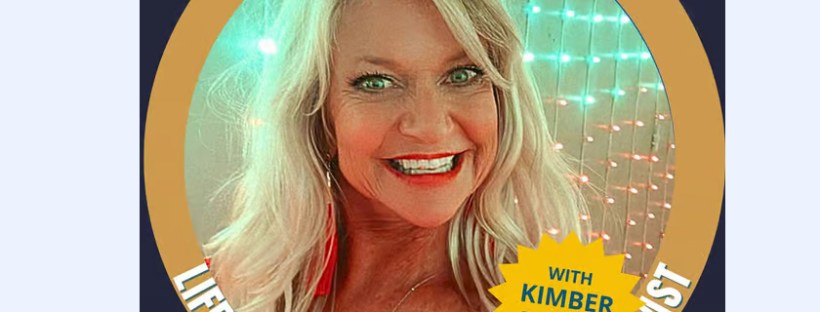
Podcast: Life-Changing Challengers, “Surviving Narcissistic Abuse – Kimber Foster’s Path to Empowerment.”

Surviving Narcissistic Abuse – Kimber Foster’s Path to Empowerment

Podcast link: https://www.lifechangingchallengers.com/surviving-narcissistic-abuse-kimber-fosters-path-to-empowerment/

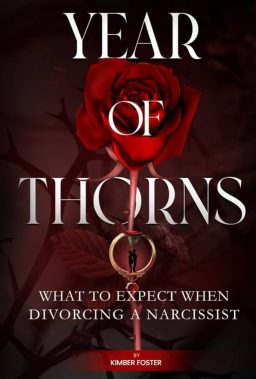
Kimber Foster shares her journey of surviving narcissistic abuse, finding healing, and empowering others with her book, The Year of Thorns.

Season 5

In this compelling episode of Life-Changing Challengers , host Brad Minus sits down with Kimber Foster, author of The Year of Thorns: What to Expect When Divorcing a Narcissist. Kimber opens up about her journey from an overachieving, people-pleasing child in Grand Rapids, Michigan, to enduring a toxic marriage characterized by narcissistic abuse, manipulation, and control.

After 27 years in a marriage with a narcissistic spouse, Kimber found herself emotionally broken, isolated, and fighting to regain her sense of self. Through her writing, coaching, and advocacy, she now empowers others to recognize red flags, break free from abusive relationships, and reclaim their lives. This episode is a raw, honest look at the insidious nature of narcissistic abuse and the strength it takes to rise above it.

Episode Highlights 

  • [2:00– Kimber’s childhood as the youngest of three, growing up as an “oops” child in Michigan
  • [15:00– Early red flags in her marriage and the gradual erosion of her self-worth
  • [30:00– The isolation caused by constant moves and her husband’s control over their life and finances
  • [45:00– Surviving emotional, verbal, and physical abuse and the realization she was married to a narcissist
  • [1:05:00– The breaking point: a panic attack that forced her to face the reality of her situation
  • [1:20:00– Writing The Year of Thorns and why sharing her story was a turning point in her healing
  • [1:35:00– Kimber’s divorce checklist: A comprehensive guide for those preparing to leave a toxic relationship

Key Takeaways 

  1. Love Bombing Is a Red Flag – Narcissists often come on too strong too fast to create a false sense of connection.
  2. Narcissists Never Take Accountability – If someone constantly blames others and never admits fault, pay attention.
  3. Gaslighting Is Psychological Abuse – Making you doubt your reality is a classic tactic used to maintain control.
  4. Reclaiming Your Identity Takes Time – After years of manipulation, rediscovering your self-worth is a process.
  5. Resources Exist—You’re Not Alone – Kimber’s Divorce Checklist offers practical guidance for those ready to leave.

Links & Resources 

  • 📘 Book The Year of Thorns: What to Expect When Divorcing a Narcissist – Buy on Amazon 
  • 🌐 Website YearOfThorns.com – Access free resources including her Divorce Checklist , blogs, and coaching info
  • 📱 Connect with Kimber on Social Media :

If this episode resonated with you or someone you know, please share, subscribe, and leave a review . Kimber’s story is a testament that healing is possible.

Have an idea or feedback? Click here to share. 

Contact Brad @ Life Changing Challengers 
Instagram: 
@bradaminus 
Facebook: @bradaminus 
X(Twitter): @bradaminus 
YouTube: @lifechangingchallengers 
LifeChangingChallengers.com

Break These Chains

I wrote Break These Chains as a declaration of strength, healing, and transformation. For so long, I carried the weight of my past—replaying the pain, the hurt, and the struggles. But I realized that as long as I kept telling the story of my suffering, I was keeping myself trapped in it.

I didn’t want to be defined by what broke me—I wanted to be defined by how I rose. I wanted to stop telling the story of my suffering year and start telling the story of my thriving year.

This song is about pushing through the darkness, learning to love myself again, and truly letting go—not just for the sake of moving on, but for the sake of my own peace and happiness. It’s about choosing forgiveness, not because they deserve it, but because I deserve to be free.

I wrote this song not just for myself, but for anyone who feels stuck, who feels like they’re drowning in their past. I want you to know—you don’t have to stay there. You can break those chains, you can heal, and you can thrive. This is my anthem of survival, and I hope it helps you find your own.

Check out this awesome song I created with Donna: https://app.musicdonna.com/fTT67GfG

Break These Chains…

I was losing myself,

Fading away,

Trapped in a story

I didn’t wanna stay.

Every tear that fell,

Every sleepless night,

Kept me in the dark,

But I’m stepping into light.

What you’re not changing,

You’re choosing to be,

So I made the choice

To set myself free.

I had to break these chains,

Let the past slip away,

Cut the weight of the hurt,

No, it won’t make me stay.

I had to learn to forgive,

Let go of the pain,

I had to love myself again.

I’m a survivor,

And I’m walking tall,

I’ve walked through the fire,

But I’m stronger through it all.

The past tried to hold me,

But I broke away,

Now I’m choosing to rise

Every single day.

What you’re not changing,

You’re choosing to be,

So I made the choice

To set myself free.

I had to break these chains,

Let the past slip away,

Cut the weight of the hurt,

No, it won’t make me stay.

I had to learn to forgive,

Let go of the pain,

I had to love myself again.

Forgiving ain’t easy,

But it’s how I move on,

It’s not for the one who hurt me,

But so I can be strong.

I found love in God,

And I found love in me,

Now I walk in the light,

Now I finally see.

I had to break these chains,

Let the past slip away,

Cut the weight of the hurt,

No, it won’t make me stay.

I had to learn to forgive,

Let go of the pain,

I had to love myself again.

[Outro]

Yeah, I love myself again…

And I’m finally free.

3 Key Tips to Break Free from a Toxic Relationship

  1. Overcome Fear
  • What you’re not changing, you’re choosing. Every day you stay in a toxic relationship, you’re choosing to remain in a cycle of pain and suffering. You have the power to change that.
  • Fear is what keeps you stuck. The fear of the unknown, the fear of change, and even the fear of being alone can feel overwhelming, but they will keep you trapped in a situation that isn’t serving you. You cannot grow in an environment of constant fear.
  • You can’t become who you’re meant to be while living in fear. Breaking free requires courage, but it’s a step toward reclaiming your true self. You cannot evolve or heal if you are constantly in a state of survival.
  • Push beyond the boundaries of your comfort zone. It might feel impossible, but the discomfort you feel now will be worth it when you’re living your life on your own terms. Change begins when you’re willing to face that fear head-on.
  • Be honest with yourself. The first step in breaking free is acknowledging the truth of your situation. Stop minimizing the toxic behaviors, and be real about what you’re enduring. The path to healing starts with self-honesty.

2. Be Prepared

  • Protect your finances and belongings. Secure important documents, set aside emergency funds, and take anything that matters to you. Preparation can make your escape easier when the time comes.
  • Know your legal rights. Consult a lawyer and get informed about your rights, especially if there are children, shared assets, or legal matters involved. This will give you the confidence to take action when you’re ready.
  • Have a safe place in mind. Whether it’s a friend, family member, or a shelter, know where you can go if things escalate. Having a backup plan ensures that you’re not caught off guard when you need to leave quickly.

3. Believe in Yourself

  • Trust your feelings. Toxic relationships often make you question your own reality, but your feelings are valid. You deserve clarity, peace, and a relationship that lifts you up, not tears you down.
  • You deserve kindness and happiness. You are worthy of love that respects and values you. Don’t settle for less. Break free and create the space for joy, healing, and positivity to enter your life.
  • You are strong. You’ve already shown incredible courage by considering breaking free. Trust your strength and keep going—each step you take brings you closer to a brighter, healthier future full of rainbows.

You are a survivor and a thriver—this experience has taught you invaluable lessons that will make you stronger, wiser, and more resilient. You have everything you need within you to break free, heal, and step into the life you truly deserve. The best is yet to come, and it’s yours for the taking.

What’s keeping you from taking that first step?