There are days when it feels like the world is ending.
Days when everything feels heavy, uncertain, and directionless.
Days when you wonder, Is this really my life? Is this all there is?
If you’ve lived through betrayal, control, or emotional erosion, those days aren’t rare—they’re familiar.
And then—almost without warning—everything changes.
A single phone call.
A chance meeting.
A quiet prayer spoken out loud.
A door you didn’t even know existed suddenly swings open.
It can feel like the flip of a switch.
I know this because I’ve lived it. And if you’re reading Year of Thorns, chances are you have too.
There was a day—one ordinary-looking day—that turned out to be the most consequential day of my life. It was the day I decided to leave. No fireworks. No applause. Just a bone-deep realization that staying was costing me more than leaving ever could.
That day felt like failure.
Like grief.
Like the end of everything I thought my life was supposed to be.
I didn’t know then that it was also the first day of my becoming.
When you leave a narcissistic or toxic relationship, there isn’t a clean break. There is fear. There is guilt. There is the terrifying question of Who am I without this person? And yet—somewhere beneath the wreckage—there is a small, steady voice saying, This is not the end. This is the beginning.
That single decision—made on the hardest day—changed the entire trajectory of my life.
I’ve seen this same quiet, divine alignment show up again recently, both in my own life and in my daughter’s. She became engaged to someone she hadn’t known for very long, and yet it felt unmistakable. Like a gift from heaven. A match made not by force or fear, but by peace. When you know, you know. No chaos. No convincing. Just certainty.
And then something similar happened to me.
One day, almost absentmindedly, I said out loud, “God, I just love flowers. I wish I could make a career out of this.” It wasn’t strategic. It wasn’t performative. It was a simple, honest longing—spoken without expectation.
The very next day, an amazing flower shop here in Naples called and offered me a job.
Just like that.
After years of survival mode—after living in a body trained to brace for impact—I suddenly found myself creating beauty. Getting paid to work with my hands. To breathe. To feel joy again. It felt like kismet. Like confirmation. Like the Good Lord whispering back, I heard you.
For so long, I had been standing at a crossroads, asking the same questions many women in Year of Thorns ask:
Where is my life going now? Can I trust myself again? Did I ruin everything—or did I save myself?
What I know now is this: the day you leave is not the day your life ends. It is the day the fog begins to lift.
You may not see the path yet. You may only see the wreckage behind you. But step by step, the road appears. Not all at once—but enough for the next right move.
Whether you call it God, divine timing, grace, or simply reclaiming your intuition—I believe there are moments when the universe meets us halfway. Not when we beg or force, but when we finally choose ourselves.
So this is a message of hope—for every woman still in the thorns.
Don’t give up.
Keep listening to that quiet inner voice.
Trust the longing in your heart—it survived for a reason.
Even on the day that feels like everything is falling apart, something beautiful may already be aligning behind the scenes.
Sometimes, the day you think your life is over…
is the very day it begins.

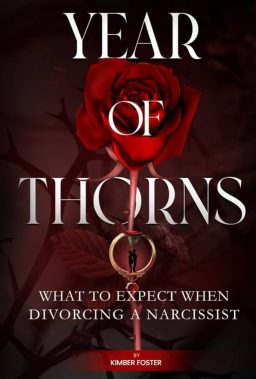
 Year of Thorns